
The Secret Science of Yang Energy (Yang-gi) in Netflix’s The East Palace: Why Korean Ghosts Are So Hungry
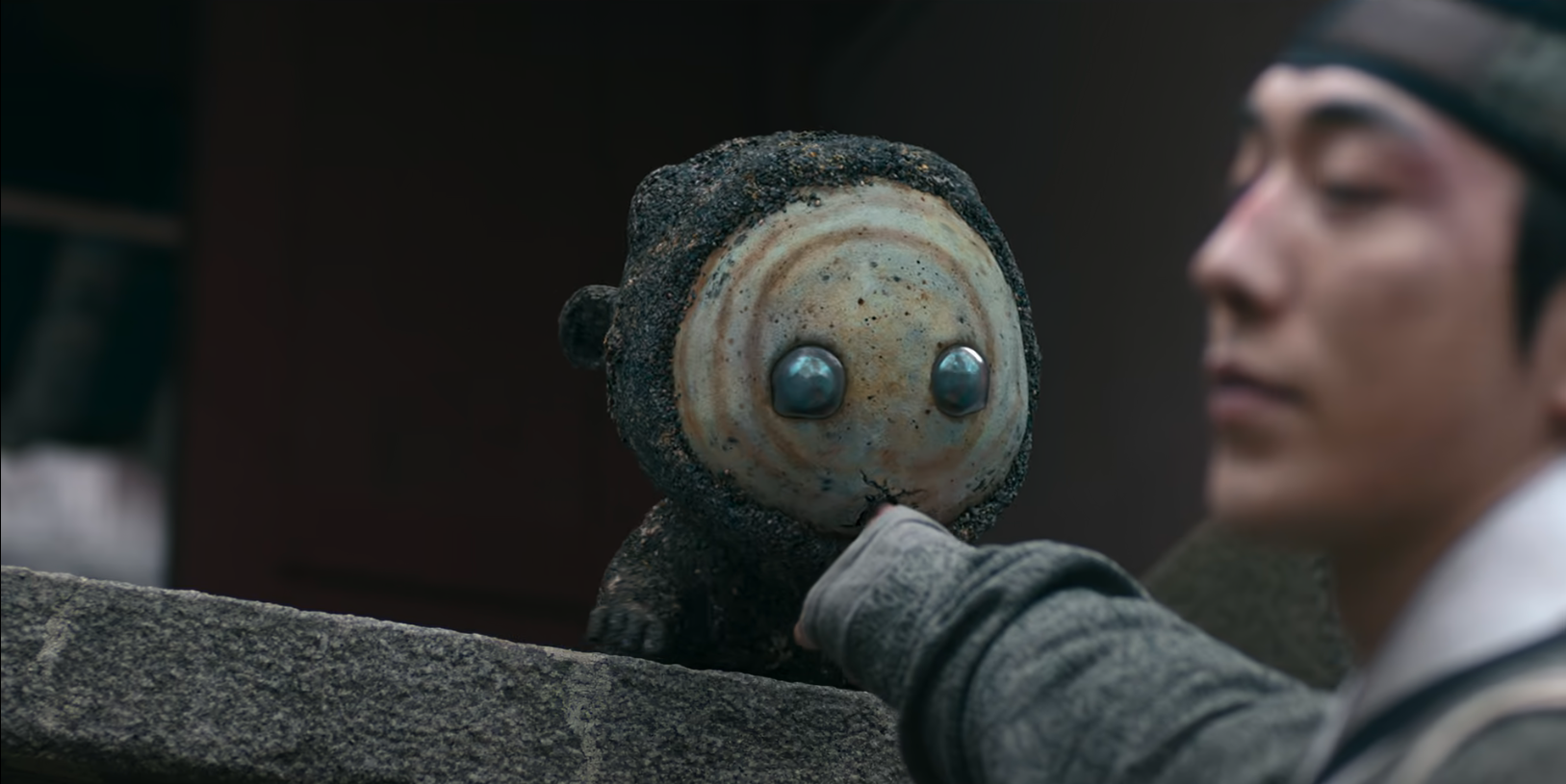
[The East Place| Ggeomeoksali feeding on Gu-cheon’s yang energy | Image credit: Netflix]
If you’ve been binge-watching Netflix’s dark fantasy hit The East Palace, you’ve probably noticed one core phrase being tossed around more than any other: Yang Energy.
In Netflix’s subtitles, it’s translated simply as "Yang Energy," but in Korean, the original term is Yang-gi (양기). If the word Gi (기) sounds unfamiliar, you likely know it by its Chinese name: Chi (or Qi). Whether called Gi in Korean, Chi in Chinese, or Ki in Japanese, it refers to the foundational life force energy that flows through all living things.
On screen, yang energy almost plays out like a video game’s HP bar. But in Korean culture, yang-gi isn't a fictional plot device created for TV—it is a deeply rooted concept stemming from centuries of East Asian medicine, shamanism, and royal Joseon history.
Have you ever wondered why spirits in Korean folklore are obsessed with stealing yang energy? Or why Koreans always say you see ghosts when you're physically weak? Let's decode the secret cultural science behind The East Palace!
What Exactly Is Yang Energy (Yang-gi)? (Breaking Down the Hanja)
To truly understand yang energy (yang-gi), we have to look at the Chinese characters (한자) that form the original Korean word:
Yang (陽 - 볕 양): Depicts the sun rising over a hill, casting warm rays in all directions. It symbolizes light, heat, activity, life force, and the sun itself.
Gi (氣 - 기운 기): Depicts steam rising from cooking rice. It represents vital energy and life force (commonly known as Chi).
Put them together, and Yang-gi (陽氣)—translated as Yang Energy—literally means "the warm, radiant energy of the sun."
In traditional Korean philosophy (음양오행 / Yin-Yang & The Five Elements), the universe is a delicate balance between Eum (Yin / 陰) and Yang (Yang / 陽).
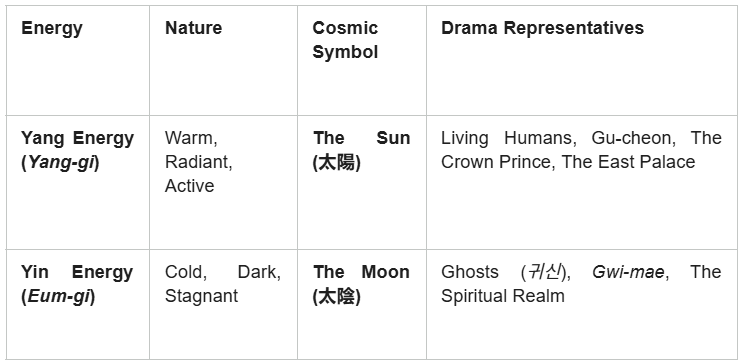
Because ghosts and spirits are disembodied entities made of pure, freezing Yin Energy (Eum-gi), they naturally lack warmth. To manifest in the physical world, maintain their form, or gain power, those that target mortals must siphon Yang Energy (Yang-gi) from living humans—much like a vampiric battery recharge!
Is Yin and Yang Energy Real, or Just Fantasy Magic?
When Western audiences hear terms like Yin and Yang energy (or Yin and Yang Chi), it sounds like a mystical aura or fantasy magic. But is it just a myth?
Scientifically, modern medicine doesn't use the term Gi or Chi because there is no single physical particle called energy in this sense. However, traditional East Asian medicine uses Yin and Yang as a functional model to describe real human physiology:
Yang Energy (Yang-gi) = Metabolism, Body Heat, & Circulation: Corresponds to your sympathetic nervous system, metabolic output, and core body temperature.
Yin Energy (Eum-gi) = Fluids, Rest, & Cellular Repair: Corresponds to your parasympathetic nervous system, hydration levels, and restorative sleep.
In short, it’s not magic—it's an ancient framework for maintaining homeostasis. When modern doctors talk about a low basal metabolic rate or circadian disruption, traditional practitioners call it a Yang-gi deficiency (양허). They are describing the exact same physical reality using different cultural tools!
How Modern Koreans Perceive Yin and Yang Energy
If you ask a modern Korean about Yin and Yang energy today, they won't talk about ghosts or exorcisms first; they'll talk about their everyday wellness:
Physical Constitution: Someone who is energetic, naturally warm, and handles winter easily is said to have "strong Yang-gi." Someone with chronically cold hands and feet (수족냉증) is advised to boost their Yang-gi.
Circadian Health: Koreans deeply respect the 24-hour cycle. Work and sunlight during the day burn Yang, while deep rest at night restores Yin—the crucial fuel tank that allows your body to generate fresh Yang Energy the next morning!
Pop-Culture Shorthand: A dark, damp, or eerie place is instantly described as having "too much Eum-gi." It’s an intuitive way of saying a space feels stagnant, cold, and unwelcoming to the living.
The Battery vs. The Flame: Won-gi and Its Relationship to Yang Energy (Yang-gi)
A common question among K-drama viewers is: Is yang energy just a fancy word for stamina or immunity?
Not quite! In Korean traditional medicine, there is a crucial distinction between Won-gi (원기 / 元氣) and Yang-gi (양기 / 陽氣). Think of them as a car’s battery and its headlights:
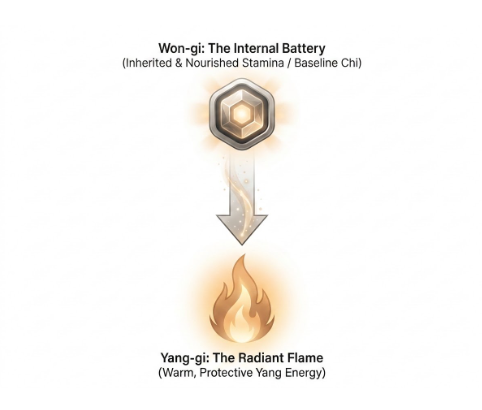
Won-gi (Original Energy): This is your fundamental, internal energy tank. It consists of the baseline health you inherit from your parents combined with the nourishment you get from food, sleep, and breath. It’s your body’s ultimate fuel source.
Yang-gi (Radiant Flame / Yang Energy): This is the warm, active byproduct generated when your Won-gi is running strong. Yang energy warms your limbs, fuels your immune system, and forms an invisible "heat shield" around your body to ward off coldness, illness, and evil spirits.
When your Won-gi (battery) is drained by overwork, illness, or trauma, your Yang energy (flame) sputters out. Without that protective flame, your body becomes overwhelmed by Yin Energy (Eum-gi). This is precisely why Koreans say, "몸이 허하면 헛것이 보인다" ("When your body is weak, you see illusions or ghosts"). When your internal battery plummets, your outer shield collapses, making you spiritually and physically vulnerable!
How to Recover Your Yang Energy & Won-gi: The Wellness Guide
So how do you rekindle your vital flame when you feel drained? In East Asian medicine, recovering yang energy isn't about instant magic; it’s about restoring metabolic balance.
A. Deep Sleep (The Ultimate Reset)
In East Asian medicine, night represents the peak of Eum (Yin). Going to sleep during the hours of Zi / Zi-shi (자시 / 11 PM – 1 AM) allows the body to quietly regenerate Won-gi and accumulate Yin fluids in the dark. This stored fuel lays the exact groundwork for a fresh burst of yang energy when the sun rises. This is why Gu-cheon is constantly complaining in The East Palace—fighting spirits at night deprives him of Zi-shi sleep, preventing his internal battery from ever fully recharging.
B. Traditional Boyang-sik (보양식 - Warm Nourishing Foods)
To reignite yang energy, you must consume foods classified as a warm/hot in nature to warm the stomach (중초) and charge your internal battery (Won-gi):
Ginseng (인삼) & Red Ginseng (홍삼): The undisputed king of yang energy recovery. Ginseng directly targets the Spleen and Lung meridians to boost primary energy.
Samgyetang (삼계탕 - Ginseng Chicken Soup): Eaten especially during Sambok (the hottest days of summer) under the philosophy of "이열치열" (Fighting heat with heat) to prevent internal coldness when the outside is scorching.
Chueotang (추어탕 - Mudfish Soup) & Eel (장어): Classic Korean stamina foods packed with essential fats and proteins specifically touted for vitality and yang energy recovery.
For a gentle daily boost, drinking warm infusions like Ginger-Jujube Tea can also help maintain internal core temperature without overloading the stomach.
⚠️ Caution: Boyang-sik Isn’t for Everyone!
Boyang-sik is not a one-size-fits-all fix! For people with a naturally "Cold" constitution, these foods are a miraculous spark plug. But for people with a "Hot" constitution or severe Yin deficiency (where internal body fluids are depleted), eating heavy, heat-inducing stamina foods can cause heat overload (열이 솟구친다), leading to skin breakouts, headaches, or indigestion. When someone is severely exhausted, starting with plain rice porridge (죽) to gently wake up the digestive system is often far safer than forcing down a heavy bowl of stamina soup!
What International Viewers Might Have Missed
Unless you are fluent in Korean wordplay and Joseon court customs, there are several brilliant layers of cultural symbolism in The East Palace that likely flew right over your head!
1. The Poetic Irony of the "East Palace"
In Joseon Dynasty architectural arrangement, the Crown Prince’s living quarters were intentionally placed in the East wing. Why? Because the East direction represents the rising sun, spring, and the absolute pinnacle of fresh Yang Energy (Yang-gi). The Crown Prince was meant to soak up this vibrant solar energy to grow into a strong ruler. The ultimate tragedy and plot twist of the drama is that this exact sanctuary—the most Yang Energy-dense place in the entire kingdom—becomes choked by the ice-cold, suffocating Yin Energy (Eum-gi) of unburied spirits. The very place built to celebrate life becomes a breeding ground for death!
2. The Mind-Blowing Name Secret: Saeng-gang
We already discussed how Red Ginseng is a legendary source for recharging your internal battery (Won-gi). But when it comes to instantly warming a freezing body and burning away cold dampness (Eum-gi), East Asian medicine relies on another powerhouse herb: Ginger.
Guess what ginger is called in Korean? It is called Saeng-gang (생강)!
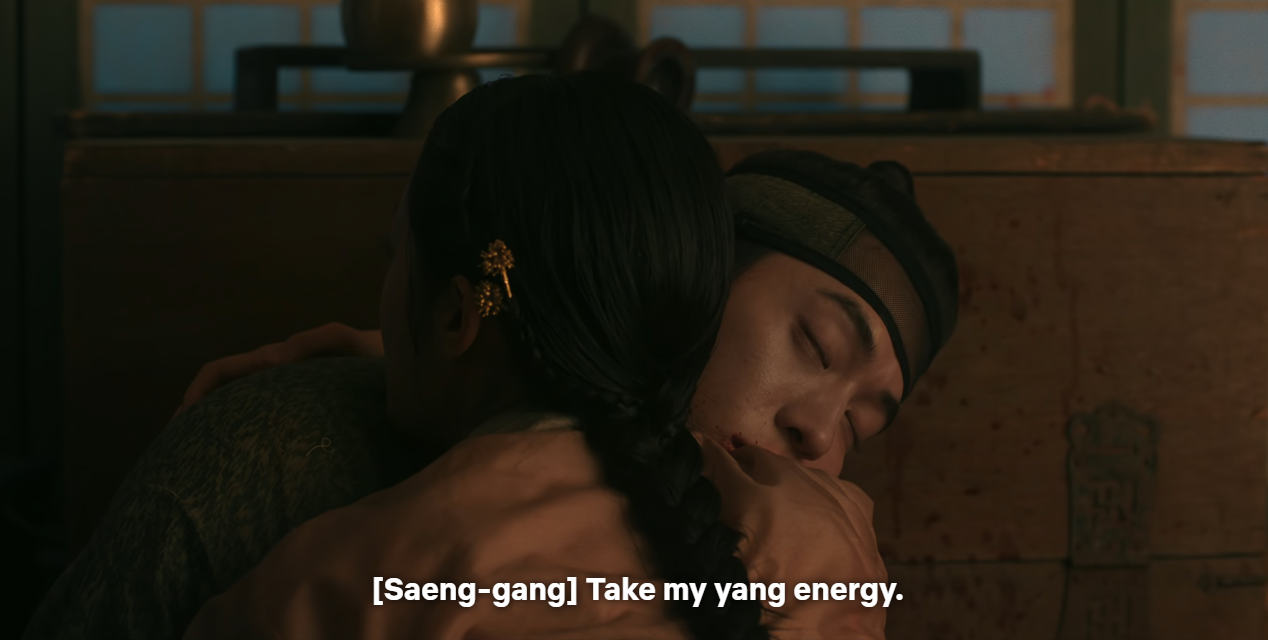
That’s right!! That is the exact name of the main female character (played by Roh Yoon-seo)! In traditional medicine, ginger is celebrated for its intensely warm nature, acting as an emergency thermal boost that drives out cold, stagnant energy. Giving her the name Saeng-gang wasn't a random choice—she is portrayed as a walking thermal heat source possessing an abundant natural reservoir of yang energy! She acts as a lifesaving lifeline for Gu-cheon whenever his body goes ice-cold from fighting spirits.
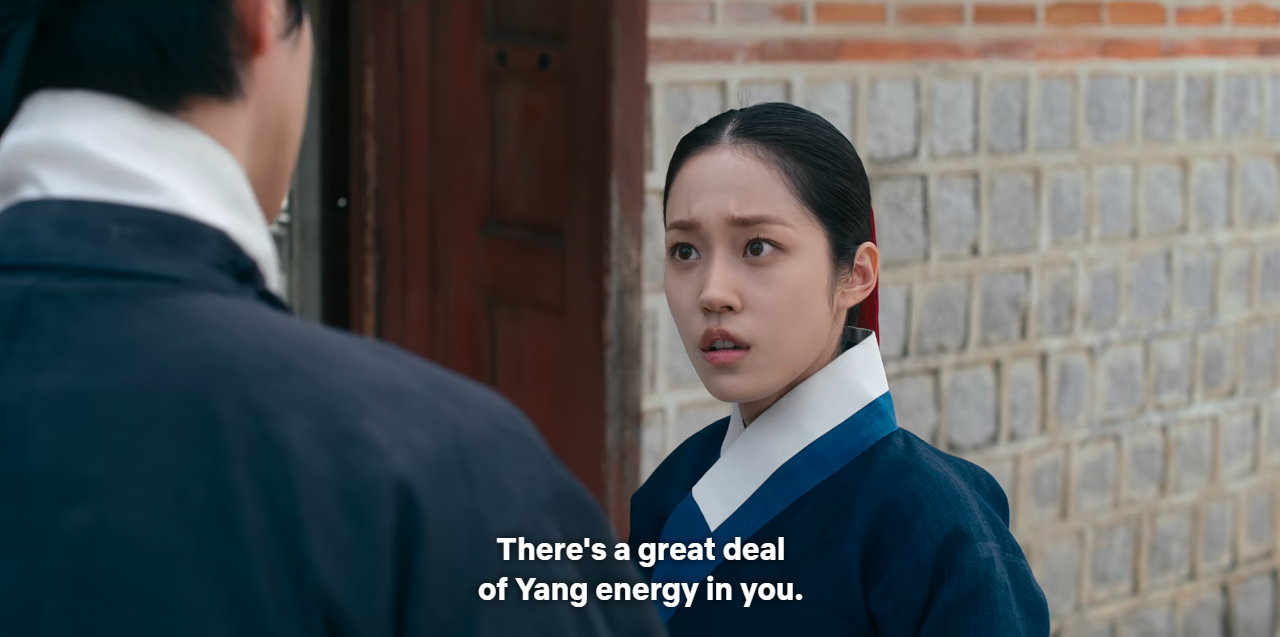
[The East Palace | Image credit: Netflix]
[The East Palace | Image credit: Netflix]
Final Thoughts: Recharging Your Vital Shield
To an international viewer, yang energy in K-dramas might look like a mystical energy. But to modern Koreans, it represents metabolic warmth, circadian health, and vitality. What makes The East Palace so special is how it transforms this ancient physiological concept into a story of connection: while evil spirits forcefully drain yang energy, Gu-cheon proves that life force can also be shared willingly through empathy, love, and sacrifice.
Now that you're armed with ancient Joseon health wisdom and secret character lore, it's time to take action! Make sure to grab your favorite warm ginseng or ginger tea, get a proper night’s sleep before the midnight hours of Zi-shi, and recharge your internal battery. After all, surviving daily burnout in the modern world takes just as much yang energy as slaying evil spirits in The East Palace!
