
The Creepy Detail You Missed in The East Palace: Real Korean Shamanism Decoded
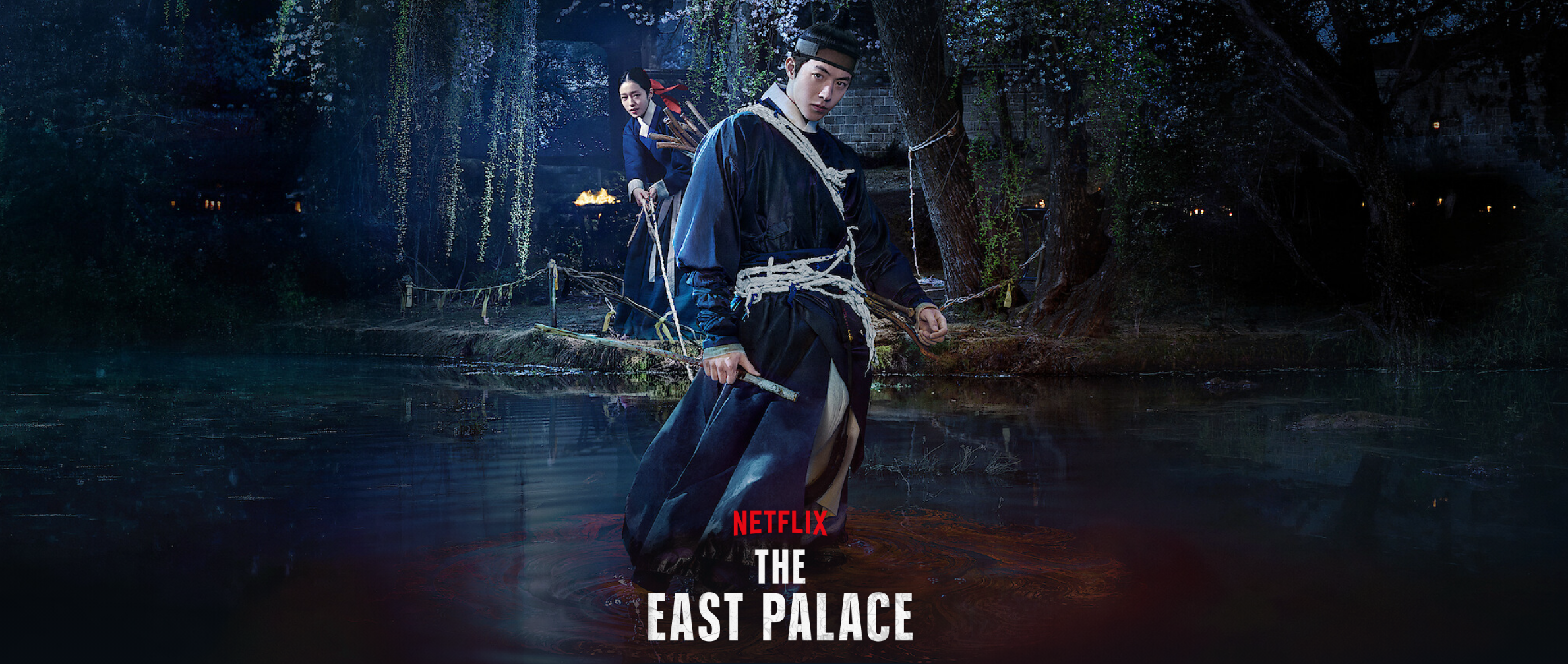
[The East Palace | Image credit: Netflix ]
If you’ve been keeping an eye on recent K-entertainment, you’ve likely noticed a massive shift in how traditional Korean shamanism is portrayed.
In Netflix’s dark fantasy hit The East Palace (동궁), the lead character, Gu-cheon (played by Nam Joo-hyuk), steps into the spotlight as a charismatic shaman and ghost-slayer navigating royal spirits. But he’s far from alone. From Lee Do-hyun’s spellbinding performance as a modern, tattooed shaman in the box-office juggernaut Exhuma (파묘) to Gang Dong-won’s talisman-wielding protagonist in Dr. Cheon and the Lost Talisman, shamans have officially transformed from obscure background figures into stylish, screen-stealing heroes.
Even animated hits are tapping into this ancient spiritual legacy—in Netflix's K-Pop: Demon Hunters, the huntresses' historical predecessors are depicted as traditional Mudang, strongly suggesting that these modern-day demon slayers are simply the latest evolution of Korean shamans operating in the 21st century!
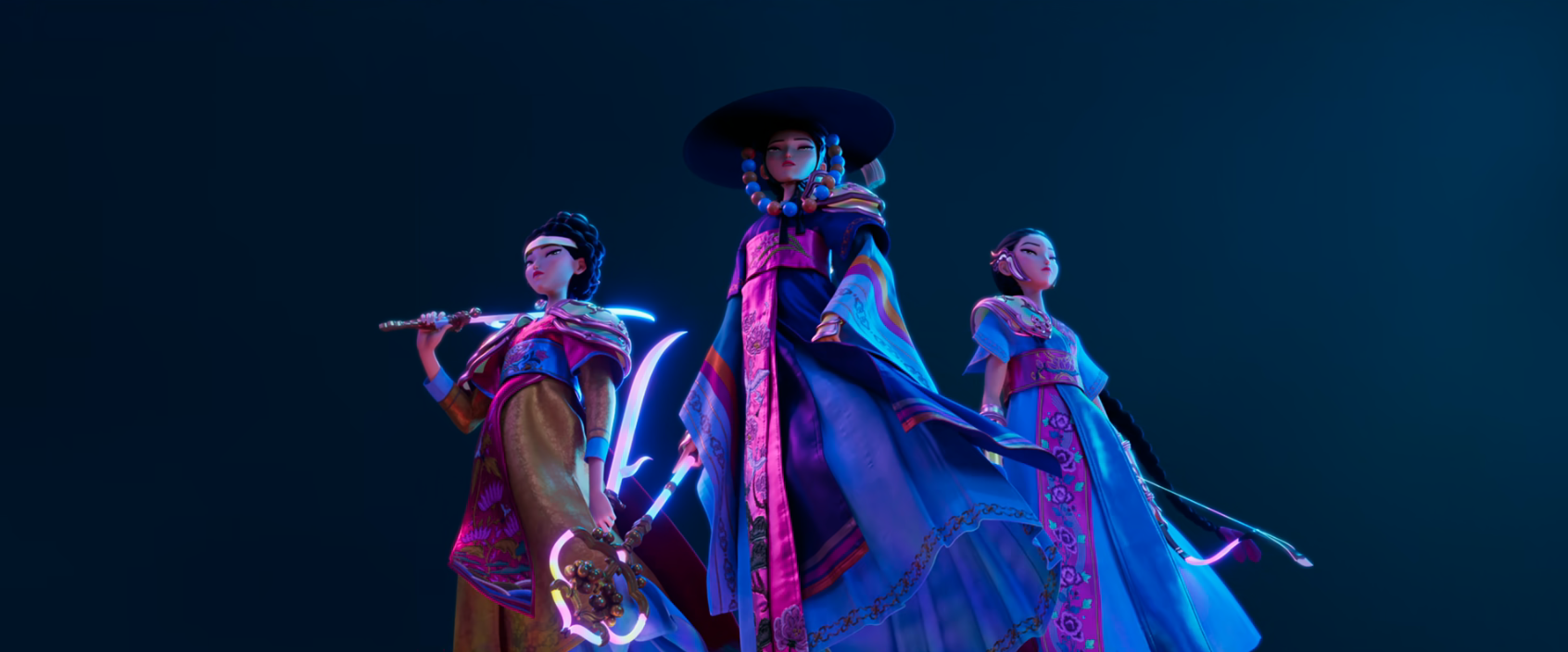
[KPop Demon Hunters | Image credit: Netflix ]
How much of what we see on screen reflects real-life practice, and what does the craft actually entail? Grab your iced Americano—we are diving deep into the true origin of the word Mudang, sacred rituals, ancestral debt, and the surprising cultural context behind The East Palace!
1. What Does "Mudang" Actually Mean?
To understand the spiritual authority of a shaman in Korean culture, you have to decode the language itself. In Korean, a shaman is commonly called a Mudang (무당 / 巫堂). When you break down the Sino-Korean characters (Hanja), the name reveals the exact core function of their craft:
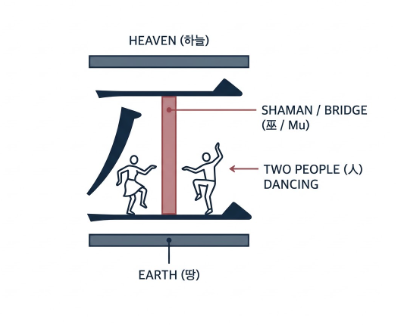
무 (巫 / Mu): The character 巫 is a pictograph. The top horizontal line represents Heaven; the bottom line represents Earth. The vertical center pillar acts as the axis or bridge connecting the two realms, while the two small figures (人) on either side represent people dancing or mediating. A Mu is literally a mediator who dances between Heaven and Earth.
당 (堂 / Dang): This character translates to a hall, shrine, or sacred sanctuary. Over time, language shifted, and the spiritual master residing over the sanctuary became known as the Mudang.
Key Distinction: "Mudang" vs. "Jeomjaengi"
A common point of confusion for international viewers is grouping all Korean spiritual readers together. It is crucial to distinguish a Mudang from a Jeomjaengi (점쟁이):
Mudang (무당 / Musogin): A true shaman who connects directly with divine spirits, deities, or ancestral lineages either through spiritual possession (Gangshin-mu) or inherited sacred rites (Seshup-mu). They perform complex ceremonies (Gut), hold spiritual authority, and channel messages directly from the spirit world.
Jeomjaengi (점쟁이): A general fortune-teller. Most Jeomjaengi do not possess spiritual energy or host spirits. Instead, they rely strictly on academic calculations, birth charts, Chinese astrology (Saju-palja), physiognomy (face reading), or tarot cards. While a Mudang can read your fortune through divine spiritual signs, a Jeomjaengi is an analyst reading a traditional system.
Vocabulary Check: "Mudang" vs. "Musogin" vs. "Mansin"
Mudang (무당): The traditional historical term. Because Joseon-era elites looked down on shamans, calling someone a Mudang in a historical drama can carry a sharp, derogatory tone.
Musogin (무속인): The modern, respectful, and politically correct term used by news outlets, documentaries, and practitioners today.
Mansin (만신 / 萬神): An honorific title meaning "Master of Ten Thousand Spirits," reserved for veteran, highly venerated shamans
2. What a Mudang Does in Real Life
In real-life South Korea, Musok (무속 / Korean Shamanism) is not about casting glowing spells or waging physical battles against evil monsters. At its true core, the role of the Mudang is that of a spiritual healer, emotional counselor, ancestral mediator, and preserver of traditional folk culture. Rather than acting as a supernatural warrior, a Mudang serves as a vital bridge between the living and the dead—acting as a spiritual lawyer who unties knots of generational grief (Han), restores harmony between troubled descendants and their ancestors, and provides an essential emotional pressure valve for the community.
The Ultimate Ancestral Mitigator
In Korean folk belief, family ties are not severed by death. Your relatives transition into ancestral spirits (Josang-shin / 조상신). When a family faces sudden illness, financial ruin, or endless misfortune, they consult a Mudang to answer one central question: "Which ancestor is upset, and why?"
The shaman acts as a spiritual lawyer or mediator, performing a process called Josang-haewon (조상해원)—literally "untying the knots of ancestral resentment." Through trance channeling (Gongsu), the shaman allows the spirit to speak directly through their body, airing old grievances so the family can apologize, offer a reconciliation banquet, and guide the spirit safely to the afterlife.
3. Insight into The East Palace Ending: The Ancestral Connection
This ancestral dynamic provides the key to unlocking the chilling final scene of The East Palace!
In the closing, Gu-cheon looks toward the throne and sees the hovering spirits of past kings—both those who succeeded in becoming king and those who failed.
To an international viewer, this might look like a standard dark fantasy curse. But in Korean folk theology, it is a masterclass in ancestral debt:
Those Who Became King: Even crowned Joseon monarchs carried the blood-stained guilt of executed rivals, political purges, and court betrayals. Their lingering spirits demand royal accountability from the reigning descendant.
Those Who Failed (Deposed Princes & Rivals): When political losers were executed in Joseon, their names were erased, and their lines were wiped out. Without descendants to perform memorial ancestor rites (Jesa), these spirits become Won-gwi (원귀 - vengeful ghosts harboring deep resentment) filled with explosive, unspent Han.
In the closing moment, the real epiphany is that the King's burden extends far beyond the political pressures of governing a nation; he is also spiritually suffocating under the weight of his lineage's unpaid debts.
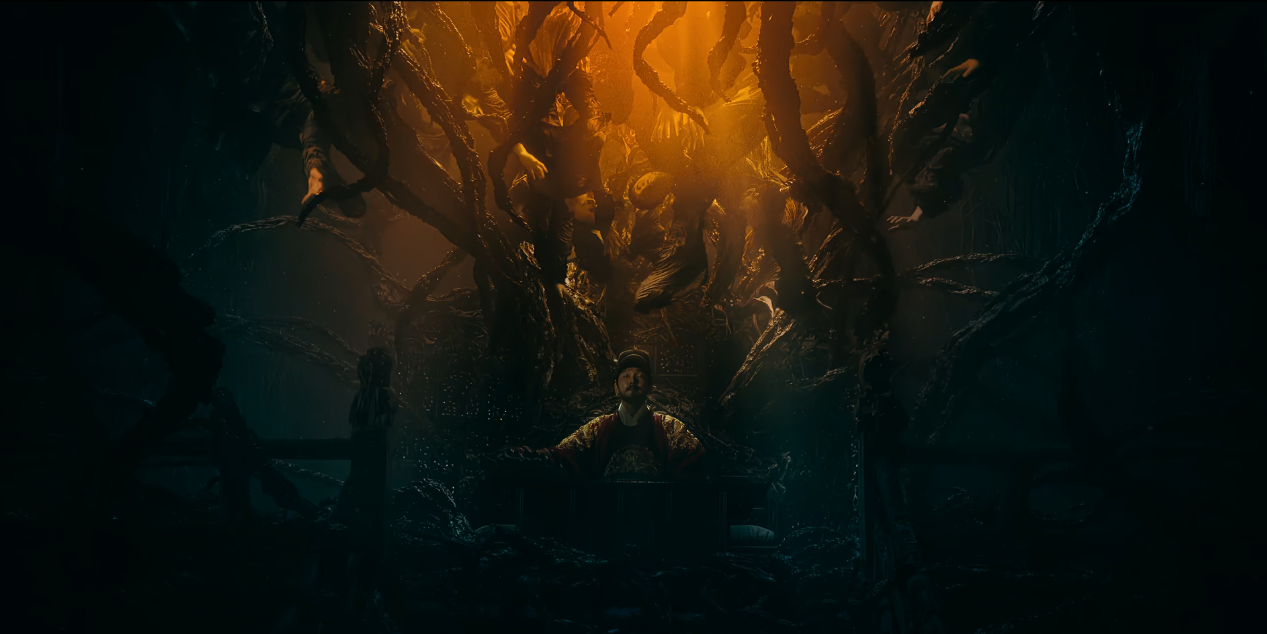
[The East Palace | Image credit: Netflix ]
4. Different Types and Clans of Mudang
Not all shamans in Korea acquire their spiritual authority in the same way. Korean shamanism is strictly categorized into two main lineages:
i) Gangshin-mu (강신무) — "The Spirit-Possessed"
These shamans do not inherit their abilities by blood. They are chosen directly by gods or spirits through Shinbyeong (신병), an agonizing "spirit sickness" marked by unexplained physical ailments and vivid visions.
Baksu Mudang (박수무당): Male spirit-possessed shamans. In real-life rituals, male shamans often wear traditional female ceremonial hanbok to balance Yin and Yang energies.
ii) Seshup-mu (세습무) / Danggol & Dangju — "The Hereditary Lineage"
Hereditary shamans are born into shamanic families. They do not experience spirit possession or trance states; instead, they operate as trained ritual priests, musicians, and custodians of sacred family shrines and relics.
In this hereditary system, two key roles define the clan:
Danggol Mudang (당골무당): The hereditary shaman assigned to care for a specific village shrine and protect its local families across generations.
Dangju Mudang (당주무당): The head master or chief custodian of a sacred shrine (Shindang or Dang). Dangju literally translates to the "Master of the Shrine."
This is the exact lineage featured in the movie Dr. Cheon and the Lost Talisman! The protagonist, Dr. Cheon, comes from a distinguished line of hereditary shamans. His grandfather was a revered Dangju Mudang—the chief master who guarded the family’s sacred shrine and possessed the powerful ancestral talisman artifacts (Seolgyeong).
💡 Linguistic TMI: The modern Korean word Danggol (단골), which means a "regular customer" or "patron" at a shop, comes directly from Danggol Mudang (당골무당)! Historically, every village family was bound to a specific hereditary shaman family (Danggol) for generations to handle their family prayers and rites. Over time, visiting your assigned family shaman became synonymous with being a loyal, regular customer.
5. Rituals, Tools, and Sacred Instruments
[Photo: Wikimedia Commons / Cultural Heritage Administration]
The Anatomy of a Gut (굿)
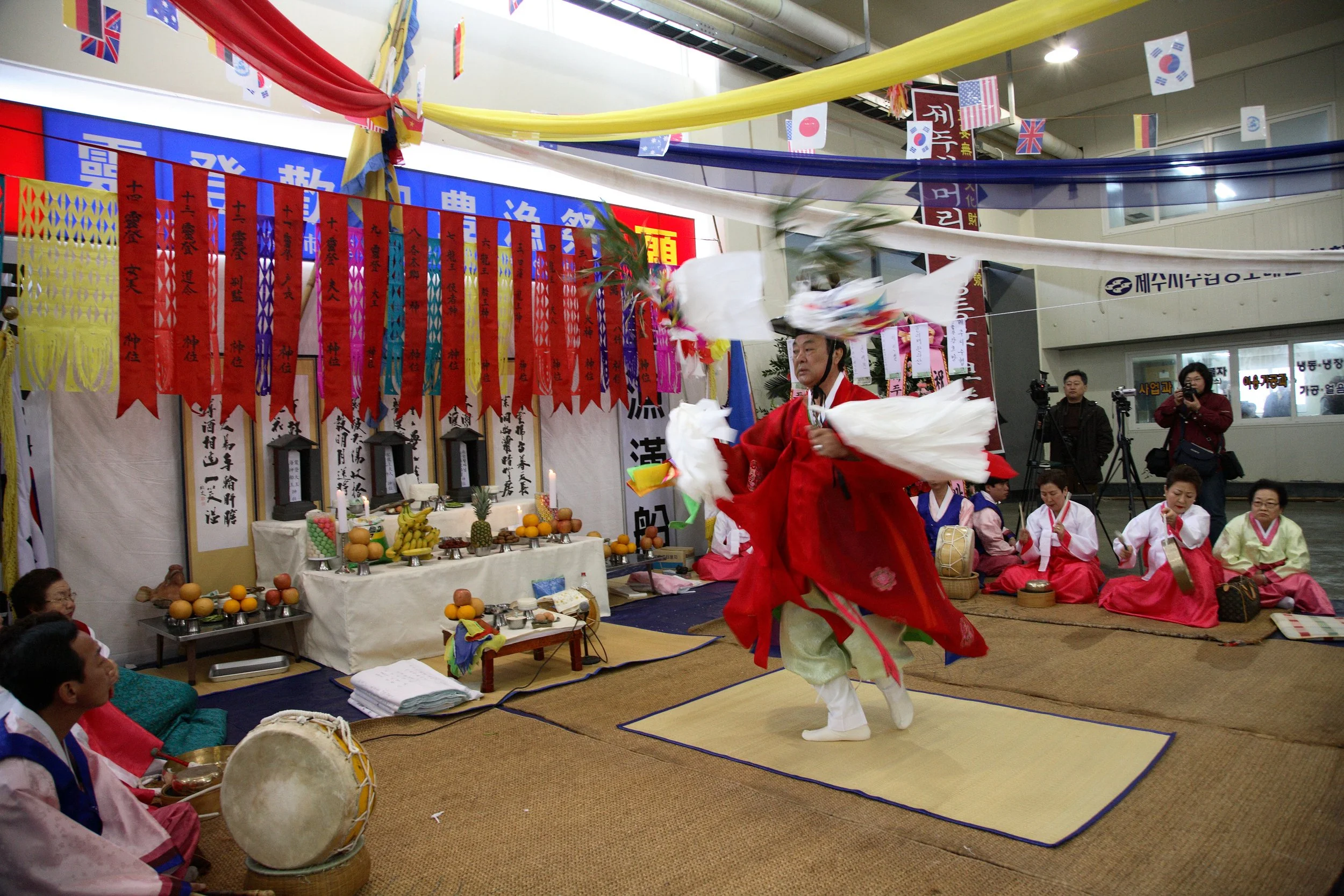
A shamanic ritual, or Gut, is a multi-hour sensory ceremony packed with elaborate offerings: rice cakes (tteok), fresh fruit, and pig heads. The shaman changes into 10–12 different traditional outfits (Gwanbok) to invite different martial, mountain, and ancestral deities into the space.
Riding the Straw-Cutter Blades (Jakdu-tagi)
One of the most famous real-life feats during a Gut is Jakdu-tagi (작두타기), where the shaman dances barefoot on two razor-sharp steel blades traditionally used for chopping straw. Dancing on sharp blades serves as visual proof to the community that the shaman is fully possessed by a high-ranking Martial God (Janggun-shin) whose divine energy shields their skin from harm.
Ritual Tools
Talismans (Bujeok / 부적): Yellow paper inscribed with red ink used to ward off evil energy or attract good fortune.
Five-Color Flags (Ohansa-gi / 오방신기): Used during fortune-telling. Clients pull a flag to reveal their luck (e.g., Red = Good Luck/Gods; White = Ancestors; Black = Death/Bad Luck).
Peach Wood Sword (Do-mok-geom / 도목검): Peach wood is believed to possess ultimate Yang energy capable of driving away malicious ghosts.
💡 K-Drama Fact Check: Funeral Rite vs. Shamanic Act
Did you spot the palace attendants putting raw rice into the dead prince's mouth in The East Palace? While it looks eerie, it isn't a dark spell or a Mudang ritual! It's an ancient Korean funeral custom called Ipban (입반), meant to feed the soul for its journey to the afterlife. Conversely, the practice of scattering salt serves as the definitive folk protective shield in Korea! Practiced by ordinary households as well as Mudangs, this ritual is intended to purify and ward off malevolent spiritual energies.
6. What The East Palace Gets Wrong About Mudang
[The East Palace | Image credit: Netflix ]
While The East Palace makes for thrilling television, it takes significant creative liberties that diverge from historical and spiritual reality:
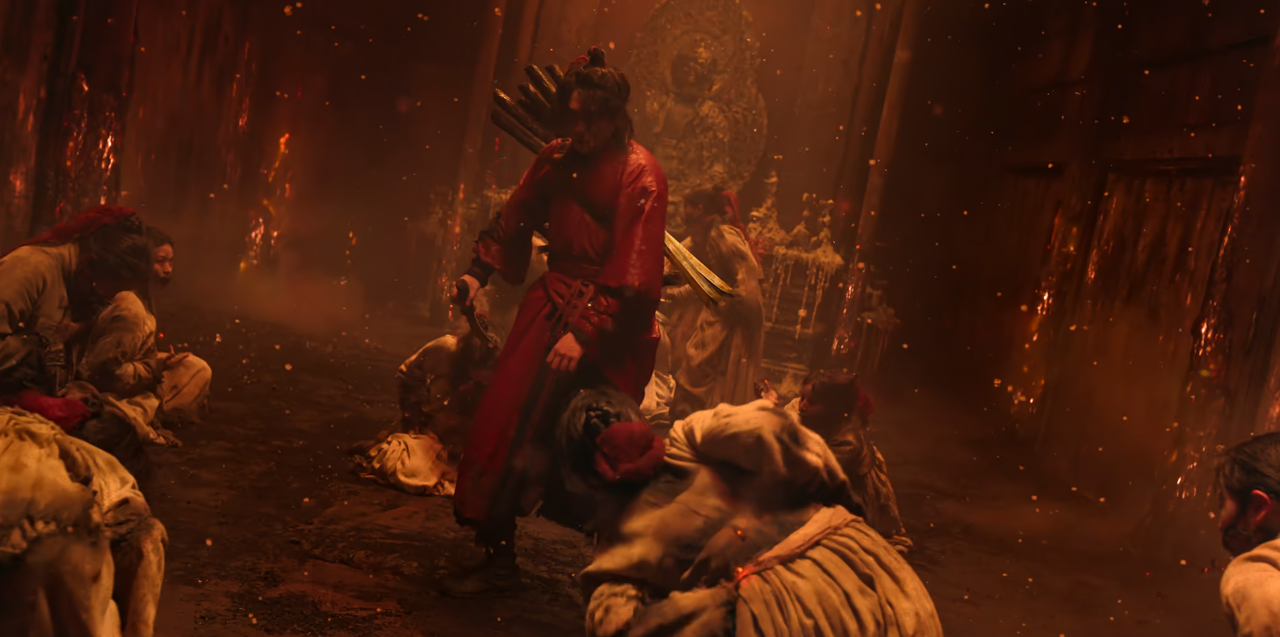
Shamans Were Not Martial Arts Experts: In the drama, Gu-cheon engages in flashy, high-flying physical sword fights against demonic forces. In reality, shamans were ritual performers and spiritual conduits, not trained combatants or martial artists.
Ignoring the Low Social Class (Cheonmin): In the Joseon Dynasty, shamans belonged to the lowest social class (Cheonmin / 천민)—on the same social tier as butchers, gravediggers, and courtesans (Gisaeng). While royalty secretly consulted them in private shrines like the Seongsucheong (성수청), shamans in real life could never command high-ranking court ministers or walk openly with aristocratic authority as depicted in drama fantasies.
Over-Exaggerating "Ghost Battles": Dramas frame shamanism as a constant physical war against evil monsters. Real-life Musok is far more focused on reconciliation, peace-making, and ancestral comfort than destructive exorcisms.
7. How Shamanism is Perceived in Korea Today
In modern South Korea, Musok occupies a fascinating dual identity:
The Gen Z & Tech Revolution: Young Koreans (the MZ generation) do not view shamanism with fear. Today’s Gen Z shamans stream on TikTok, take consultation bookings via KakaoTalk, and run digital fortune-telling apps.
Corporate & Cultural Recognition: Major CEOs consult shamans to pick auspicious dates for business launches, and film crews routinely hold Gosa (고사) ceremonies with pig-head offerings on movie sets to pray for safety. Furthermore, the Korean government officially protects major shamanic rituals as UNESCO-recognized Intangible Cultural Heritage.
8. Where You Can Experience Real Musok Culture in Korea
If you are visiting South Korea and want to observe or experience authentic shamanic culture firsthand, look beyond everyday fortune-telling booths and visit genuine spiritual sites:
Inwangsan Mountain Shrines (Seoul):Guksa-dang (국사당) on Inwangsan Mountain is one of the most famous active shamanic shrines in Korea. Visitors walking up the sacred mountain paths can often respectfully observe real-life Gut rituals and traditional drumming from a distance.
Intangible Cultural Heritage Festivals: Check official Korean tourism schedules for public performances of famous regional rituals, such as the Gangneung Danoje Festival or Jeju Island's Chilmoridang Yeondeunggut.
National Folk Museum of Korea (Seoul): Located inside Gyeongbokgung Palace grounds, this museum offers permanent exhibits detailing authentic shamanic artifacts, historical Gwanbok costumes, and ritual instruments for an educational deep dive.
Final Thoughts on The East Palace
Netflix’s The East Palace succeeds not just because of its thrilling fantasy visuals, but because it grounds its horror in Korea’s oldest surviving spiritual system. By transforming ancient royal court grievances, ancestral Han, and the traditional mediator role of the Mudang into modern television, the drama offers global audiences an unforgettable look at how the past continues to haunt the present.
