
The Perfect 5/5: Why Goblin’s Final Subway PPL Is Still K-Drama’s Greatest Brand Placement
[Guardian: The Lonely and Great God (Goblin) | Image credit: tvN]
We are kicking off our K-Drama TMI: Art of PPL series with one of the most famous and culturally debated brand partnerships in television history: the ubiquitous Subway presence in Guardian: The Lonely and Great God (Goblin) (tvN, 2016–2017).
Nearly a decade has passed since Goblin first aired, yet its commercial integrations remain an unforgettable benchmark in pop-culture discourse. While the series is packed with classic Subway setups—from casual storefront run-ins to corporate office lunches—we are deliberately bypassing the routine placements to examine the very last Subway scene in Episode 16. We are beginning with this specific moment to give you an authentic look at how an exemplary product placement is evaluated using our proprietary 5-Pillar K-Drama PPL Scoring Matrix.
1. Story Integration
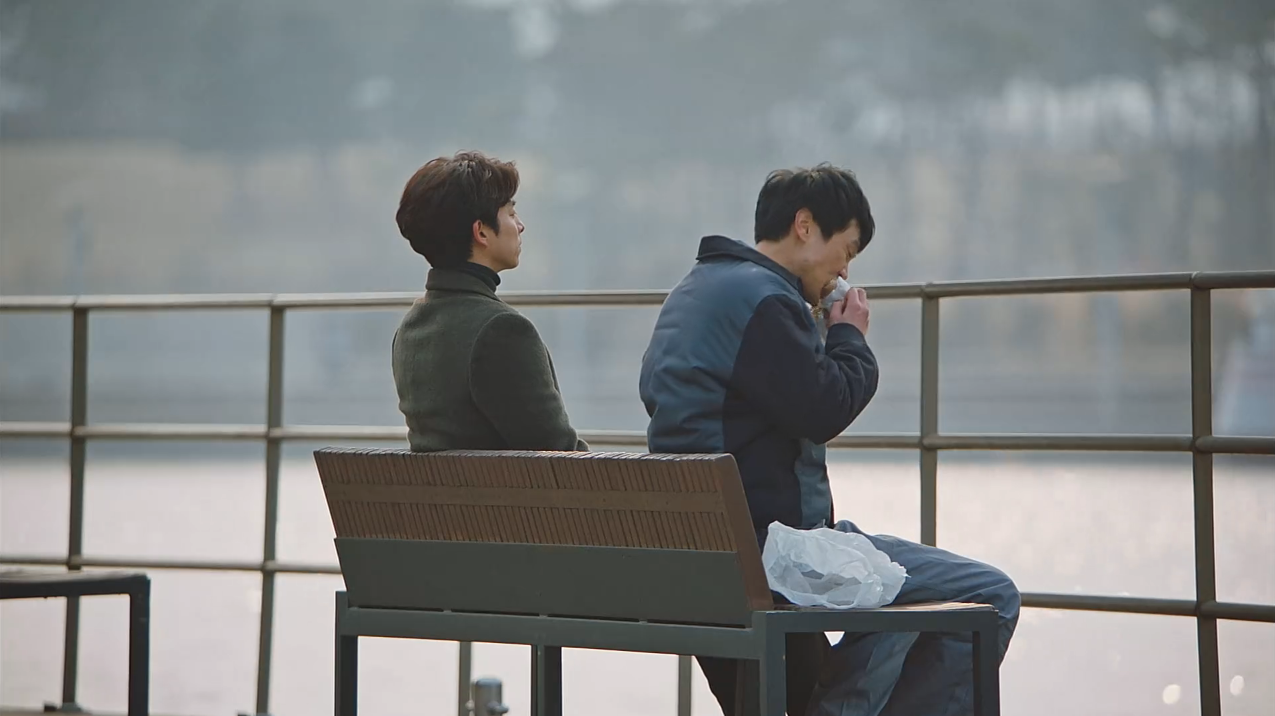
The scene takes place decades after Ji Eun-tak passes away, having sacrificed herself to save a minibus of kindergartners shortly after her long-awaited union with Kim Shin. The visual passage of mortal time is unmistakable: Secretary Kim has aged into the gray-haired CEO Kim Do-young, while the immortal Goblin sits frozen in time, bearing decades of hollow grief.
Throughout the series, Kim Shin repeatedly hands out sandwiches to mortals at critical life crossroads—such as the young adopted runaway on the steps of Paris in Episode 1 or the man on the verge of suicide in Episode 2. Here, the dynamic completely inverts: for the first time in his nine-hundred-year existence, an ordinary human hands a sandwich to him. It reveals the sheer depth of sorrow Kim Shin endured after losing his true love; even an all-powerful goblin appeared to be in desperate need of a helping hand from a fellow human.
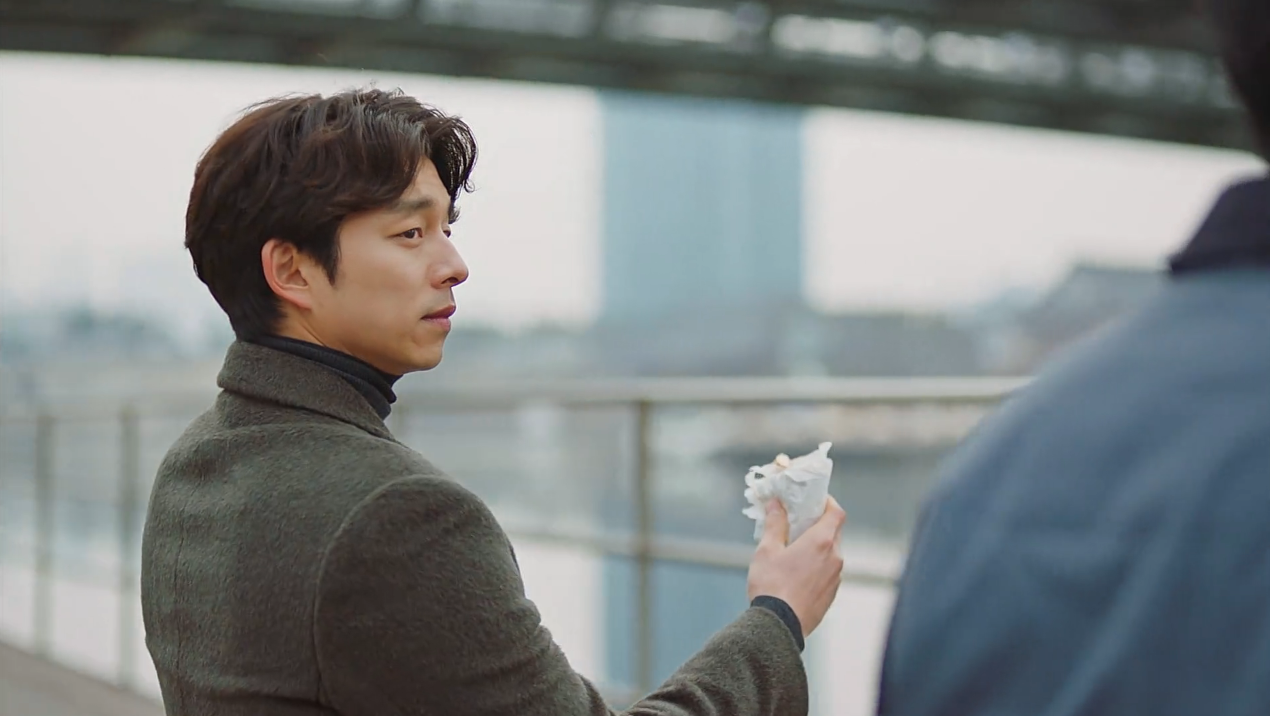
Then comes one of the drama’s most memorable narrations:
“In anyone’s life, there is a time when God stops by. When you are drifting apart from the world, if someone pushes you back towards the world, that is the moment that God has stopped by in your life."
[Guardian: The Lonely and Great God (Goblin) | Image credit: tvN]
This is the exact moment Kim Shin finally makes peace with the God he resented for centuries across his cursed immortality. Reaching this emotional and philosophical closure through a commercial sandwich placement is a remarkable feat of writing. Personally, this narration touched my heart deeply and prompted me to look back on the moments in my own life when someone gave me a push back toward the world—the quiet moments God lingered beside me. It is a sentiment that has resonated with viewers across the globe.
The scene does not end there. Kim Shin directs the man down a specific path, telling him it is for "the price of the sandwich." The man encounters CEO Kim's broken-down car, uses his twenty years of mechanic experience to fix the engine, and earns a life-changing career opportunity. It sends a clear message that those who offer help to others always have that kindness repaid.
What International Viewers Might Have Missed
Why did the mechanic instinctively assume Kim Shin was sitting on a riverside park bench because he had lost his job?
In South Korea, a family breadwinner (gajang) who faces sudden layoffs or early retirement often conceals the truth from his family. This silence is not merely an attempt to avoid the outward appearance of failure; it is driven by an overwhelming desire to spare his loved ones from panic and anxiety. Weighed down by a heavy sense of guilt—the devastating belief that he has somehow failed those who depend on him—bringing himself to confess the reality to his family feels nearly impossible.
Instead of staying home, he wakes up early, dresses in his standard work attire, leaves the house at the normal commute hour, and spends the entire day sitting on benches in public parks or along the Han River between job searches. The mechanic did not just share a meal; he recognized what he believed was a fellow provider suffering through that silent, agonizing isolation.
Score: 5 / 5
2. Product Interest
Although the sandwich is wrapped in plain white deli paper rather than branded packaging, viewers easily recognize it as Subway based on earlier placements throughout the series. While including a visible Subway logo might have offered more direct product interest, omitting it was a brilliant creative decision. Because this scene serves as a vital emotional climax, an overt commercial logo would have pulled necessary attention away from the dramatic weight of the story.
Both Korean and international viewers can agree that during times of distress and sorrow, nothing soothes the body and mind quite like comfort food. To many Koreans, traditional comfort food implies hot soups, stews, or sit-down meals that are not easily taken to go. This scene introduced the idea that comfort food can come in an accessible, handheld, on-the-go sandwich form.
Did this scene do a good job of sparking consumer interest? Absolutely. Every time I eat Subway, it immediately brings the quiet warmth of this bench scene back to mind.
Score: 5 / 5
3. Creativity
Instead of relying on typical fast-food visual tropes like brightly lit restaurant interiors, ordering counters, or dynamic eating shots, the scene promotes the product almost entirely through spoken dialogue.
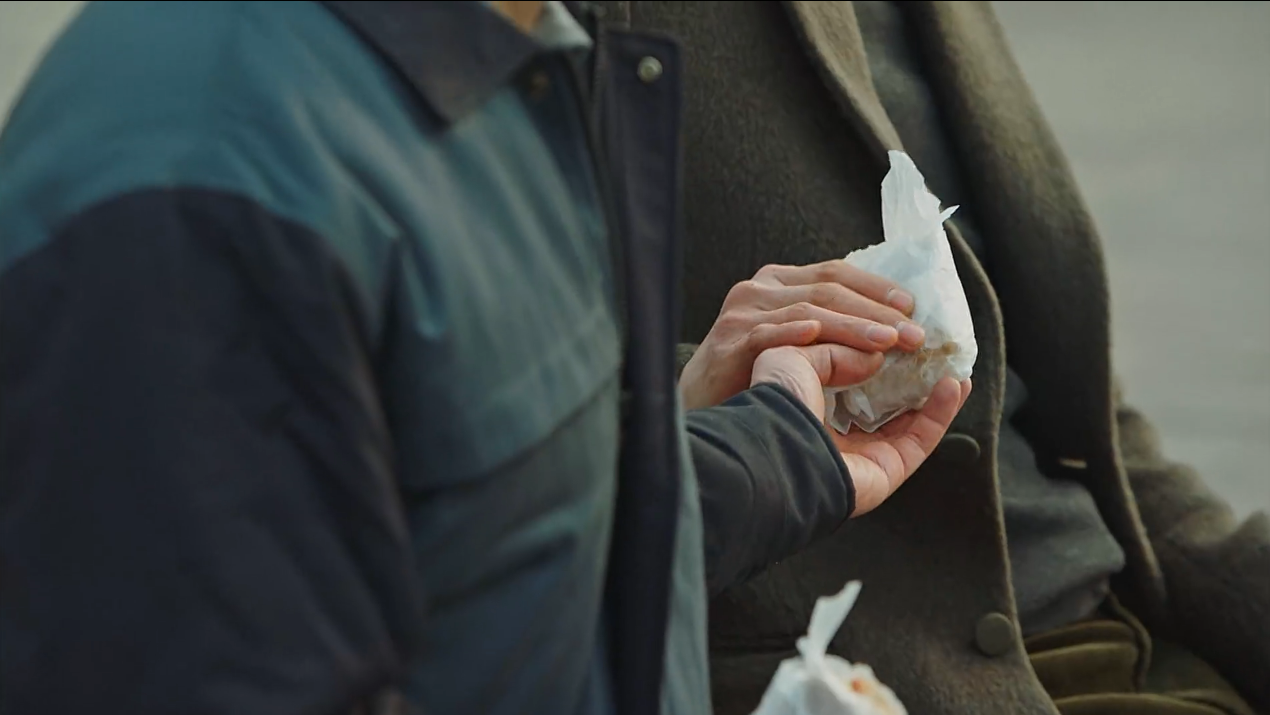
The mechanic turns to Kim Shin and asks:
"Do you know why a sandwich comes in two? It’s so you can share with others."
[Guardian: The Lonely and Great God (Goblin) | Image credit: tvN]
Screenwriter Kim Eun-sook transformed standard franchise portioning—a footlong cut into two individually wrapped halves—into a poetic statement on human connection and community care. Before watching this scene, it was hard to imagine that a fast-food sub could carry such philosophical depth. Turning a commercial obligation into an instrument of mutual human survival on a cold park bench demonstrates authorial audacity at its finest.
Score: 5 / 5
4. Filming
[Guardian: The Lonely and Great God (Goblin) | Image credit: tvN]
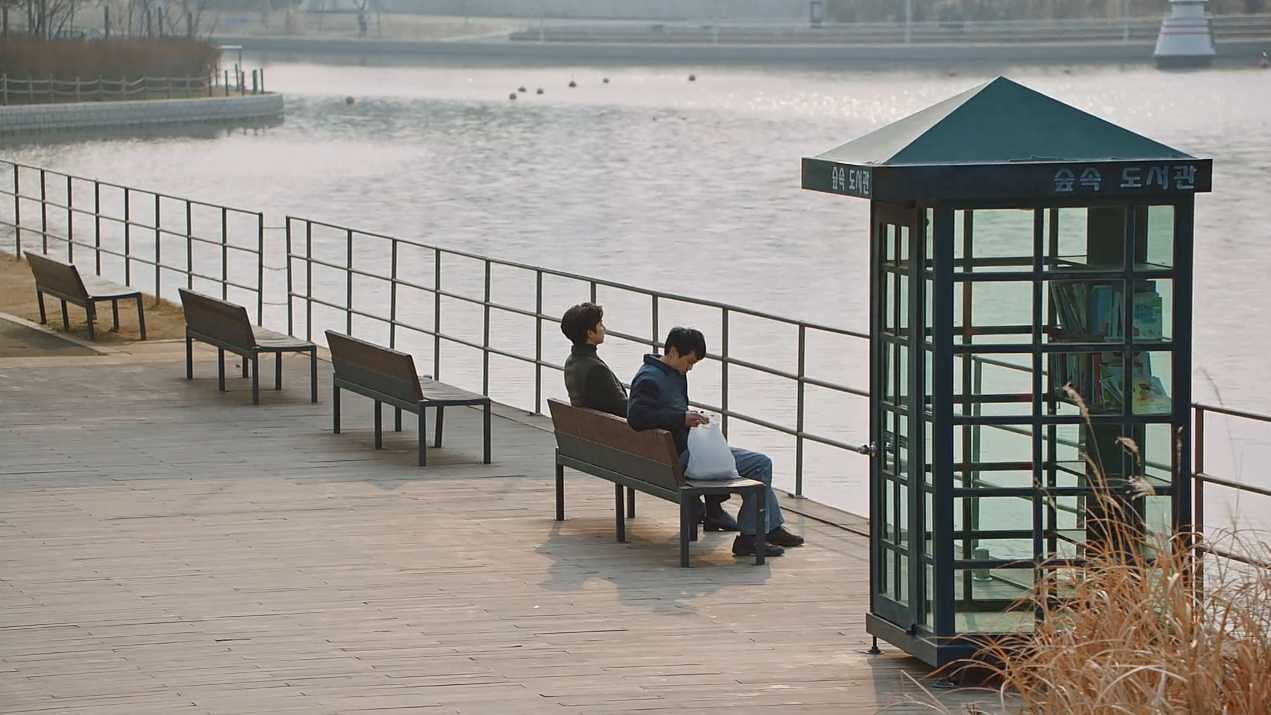
Because of the high level of story integration, the director and camera crew treated this placement with the exact same visual language and cinematic gravity as the rest of the series.
Director Lee Eung-bok framed the moment with naturalistic, cold-toned outdoor lighting by the river. The camera captures the winter chill, the steam of the actors' breath, and the simple physical transfer of the sandwich between cold hands rather than staging a glossy product insert.
Furthermore, the scene deliberately omits background music. Stripping away swelling strings or pop ballads allows the audience to focus entirely on the fragile vocal cadences of the dialogue, the raw human emotions, and the quiet intimacy of Kim Shin’s reflective narration.
Score: 5 / 5
5. Acting
Thanks to the strong narrative foundation, both actors were completely immersed in the scene. The pacing is never rushed or awkward; the actors allow the quiet pauses and heavy sighs to breathe naturally, matching the somber reality of Kim Shin's extended mourning.
Gong Yoo portrays centuries of divine solitude and sorrow with subtle, restrained expressions. At the same time, guest actor Kim Soo-bok delivers a standout performance. His natural posture, gentle demeanor, and vocal cadence perfectly capture a working-class Korean man who is enduring hardship himself, yet deliberately maintains a warm, positive front to encourage someone else in need.
Score: 5 / 5

[Guardian: The Lonely and Great God (Goblin) | Image credit: tvN]
The Final Verdict: ⭐⭐⭐⭐⭐(5/5)
This is why we chose to launch our review series with this unforgettable bench scene: nearly a decade after its broadcast, it remains the gold standard of Korean television brand integration. When commercial obligations are handled with literary care, product placement does not have to disrupt a series—it can elevate its deepest emotional truths.
If you are new to our site and wondering how we developed our evaluation framework or why South Korean television integrates products so overtly, be sure to read our foundational breakdown:
👉 [The "Truman Show" Effect: Decoding the Absurd, Iconic World of K-Drama PPL]
We will be back soon with more iconic PPL breakdowns from other hit dramas to see if any modern contender can challenge this vintage, perfect score.
