
The "Truman Show" Effect: Decoding the Absurd, Iconic World of K-Drama PPL
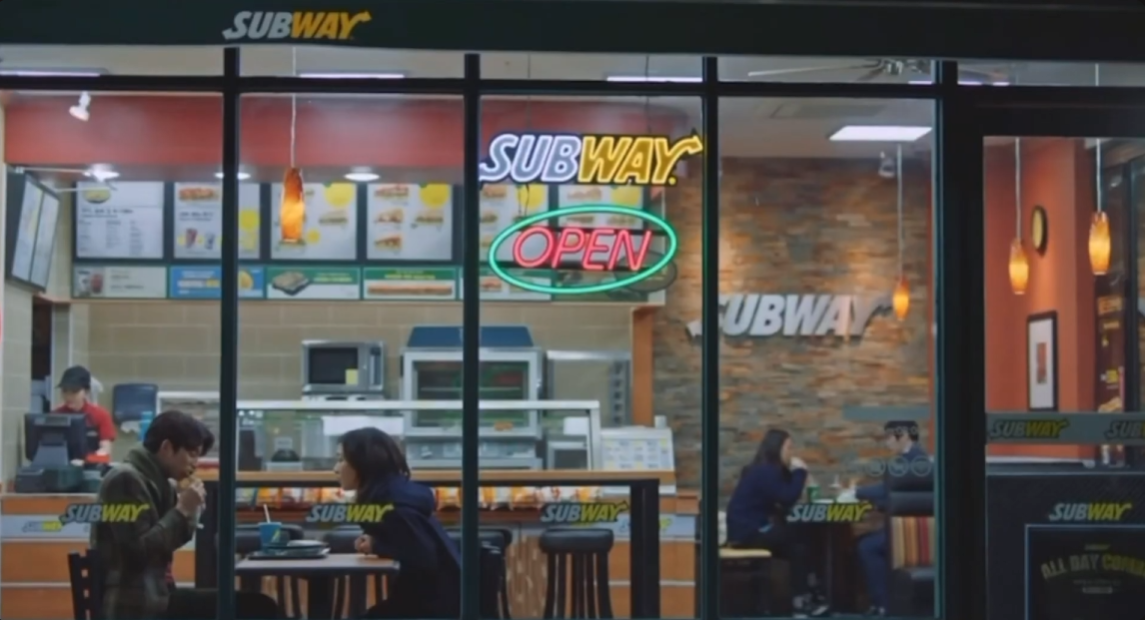
[Goblin | Image credit: tvN]
Have you ever been watching a deeply emotional Korean drama—say, a tear-jerking breakup or a high-stakes corporate thriller—and suddenly, the lead actress pauses, pulls out a sleek pink stick of balm, and slowly swipes it across her cheeks, neck, and lips in crisp 4K resolution?
Or perhaps a centuries-old Goryeo warrior, freshly time-traveled into modern-day Seoul, decides his very first meal in the twenty-first century must be a footlong Italian B.M.T. from Subway?
If this sounds familiar, you have officially stepped into the unhinged, shameless, and utterly iconic world of K-Drama PPL.
For international viewers, these scenes feel startlingly reminiscent of the 1998 satirical film The Truman Show. Remember the scene where Truman is in the middle of a screaming match with his wife, Meryl, and she suddenly turns directly to an invisible camera, holds up a canister of instant cocoa, and chirps about "all-natural cocoa beans from the upper slopes of Mount Nicaragua"?
In Hollywood cinema, that scene was a dystopian parody of a life hijacked by corporate sponsors. In the Korean drama industry? That is simply the cost of doing business.
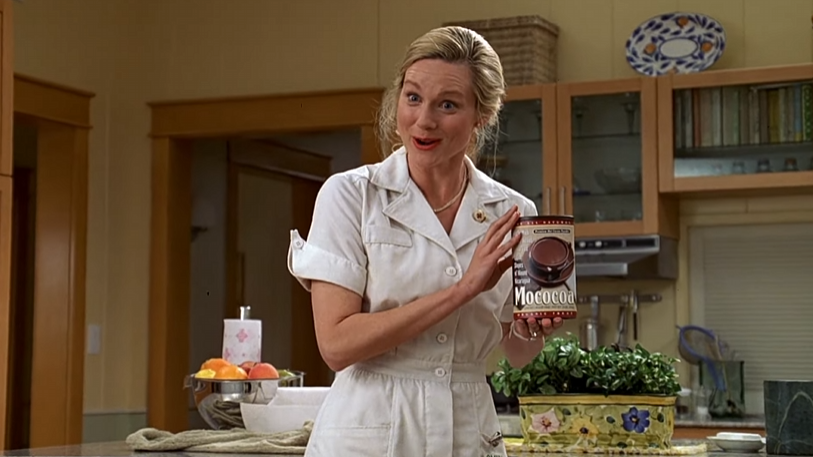
[Truman Show | Image credit: Paramount Pictures]
What Exactly Does "PPL" Mean?
To international audiences, the acronym might sound like digital marketing jargon or a pay-per-click advertising metric. In English, we usually refer to this practice as product placement, brand integration, or embedded marketing.
In South Korea, however, PPL (pronounced phonetically by spelling out the English letters: 피피엘 / P-P-L) is an everyday household word.
Unlike Western television where product placement is often slipped discreetly into the background of a shot, Korean television embraced the term as an open cultural phenomenon. Korean viewers, variety show hosts, and actors openly joke about PPL on camera. When a character suddenly holds up a drink label directly toward the viewer, everyone in the audience knows exactly what is happening—it is time for the mandatory PPL moment.
The Root Cause: Why Is K-Drama PPL So Outrageous?
Why do Korean television writers crash through the fourth wall to showcase a sandwich or a skincare stick? The answer lies in the unique financial and regulatory history of Korean broadcasting.
The Ban on Mid-Broadcast Commercial Breaks
For decades, South Korean government policy strictly prohibited terrestrial broadcast networks (KBS, SBS, and MBC) from interrupting television programs with traditional commercial breaks. Unlike American network television, which cuts away to a commercial break every ten to fifteen minutes, an hour-long Korean drama episode had to air continuously from start to finish. Commercials could only run before the episode began and after the end credits rolled.
Skyrocketing Production Budgets
As the Korean Wave (Hallyu) expanded across the globe, the cost of producing top-tier K-Dramas exploded. Creating cinematic period pieces, high-concept sci-fi thrillers, and star-studded romances required massive budgets—frequently exceeding millions of dollars per episode. Without the ability to sell lucrative mid-broadcast commercial slots, domestic networks faced a severe funding shortage.
The 2010 Legalization of Embedded PPL
To keep the industry competitive, the South Korean government revised the Broadcasting Act in 2010, officially legalizing embedded Product Placement. This reform allowed production houses to offset their multi-million-dollar production expenses by writing sponsored brands directly into the script.
Because showrunners needed substantial capital to fund their cinematic visions, writers were contractually obligated to carve out dedicated scenes for sponsor products. Thus, the modern era of unapologetic, in-your-face K-Drama PPL was born.
The K-Drama PPL Hall of Fame: 5 Legendary Tropes
Once you understand the mechanics of PPL, you will start recognizing the same legendary sponsor products appearing across different networks and genres:
The Multi-Balm Wand (Kahi): No matter if a female lead is driving through Seoul traffic, investigating a crime scene, or preparing for a courtroom trial, she will inevitably pull out a pink twist-up stick to hydrate her neck and cheekbones.
The Universal Dining Spot (Subway): From impoverished high school students to top 1% chaebol heirs and immortal fantasy deities, characters from all walks of life hold their most crucial meetings inside a pristine, brightly lit Subway restaurant.
The Stamina Sachet (CheongKwanJang Red Ginseng): When an overworked surgeon, prosecutor, or corporate manager hits a mid-afternoon slump, they aggressively rip open a thin foil packet of liquid red ginseng with their teeth and down it in one shot.
The Dramatic Smartphone Snap (Samsung Galaxy Z Flip & Fold): There is no better way to punctuate a fiery argument or an emotional breakup than by violently snapping a foldable smartphone shut.
The Wrapper-Stirred Coffee (Maxim Gold & Kanu): In a hyper-authentic nod to Korean office culture, characters dump an instant coffee packet into a paper cup and immediately use the empty, folded wrapper itself as a stirring stick.
The Kim Eun-sook Connection: Master of the Blockbuster Plug
Take a look at some of the most globally renowned K-Dramas of the past fifteen years:
Secret Garden (2010–2011)
Inheritors (2013)
Descendants of the Sun (2016)
Guardian: The Lonely and Great God (Goblin) (2016–2017)
Mr. Sunshine (2018)
The King: Eternal Monarch (2020)
Every single one of these titles is a mega-hit that redefined the international reach of Korean television. They are also world-famous for their heavy, memorable PPL moments—ranging from the legendary Secret Garden cappuccino foam kiss to the uninhibited brand showcase throughout The King: Eternal Monarch.
Guess what all of these iconic dramas have in common? They were all written by the undisputed queen of Korean television: star screenwriter Kim Eun-sook.

[Photo: Wikimedia Commons /
리플레이REplay TV]
Kim Eun-sook elevated K-Drama PPL to an art form. Rather than shying away from commercial obligations, she embraced massive production budgets and wove brand sponsorships directly into her trademark snappy dialogue, viral catchphrases, and romantic tropes.
The Fascinating Exception: The Glory
n 2022, Kim Eun-sook shocked the industry by delivering the dark, gritty revenge masterpiece The Glory.
Despite breaking viewership records worldwide, The Glory was completely devoid of traditional, overt Korean PPL. Why? Because the series was produced as a pure Netflix Original.
With production costs funded directly by a global streaming platform rather than domestic broadcast sponsors, the writer was completely liberated from commercial integration mandates. The contrast between The King: Eternal Monarch and The Glory remains one of the cleanest case studies in modern television production: when global streaming money steps in, domestic PPL steps out.
What’s Next: Introducing the Official K-Drama PPL Scorecard
Here at K-Drama TMI, we believe that on-screen product placement deserves to be treated, analyzed, and critiqued as a legitimate pop-culture art form.
Moving forward, we are launching a dedicated series of standalone breakdown articles analyzing the product placement scenes within specific K-Drama titles. Every featured drama will be rigorously evaluated using our official K-Drama PPL Scoring Matrix:
5 Scoring Categories ⭐⭐⭐⭐⭐
Story Integration
Product Interest
Creativity
Filming
Acting
1) Story Integration
What It Measures: Narrative Flow & Context
Scoring Criteria: How smoothly the scene transitions into the product plug. High marks for items that advance the plot, character dynamics, or emotional resonance without breaking immersion.
2) Product Interest
What It Measures: Consumer Appeal & Desire
Scoring Criteria: How effectively the scene sparks genuine viewer curiosity, appetite, or intent to purchase the featured item.
3) Creativity
What It Measures: Authorial Creativity & Conceptual Originality
Scoring Criteria: This category evaluates the author’s inventive approach to PPL. Products left static in the background or scenes merely showing characters hanging out at a sponsored location will receive lower scores. However, this is also where wonderfully awkward or blatant PPL moments can shine, earning points for audacity even if they fall short in Story Integration.
4) Filming
What It Measures: Cinematography, Audio & Visuals
Scoring Criteria: Analyzes lighting, camera movement, close-up framing, and sound design. High scores require cinematic care rather than flat, commercial-style inserts.
5) Acting
What It Measures: Performance Commitment
Scoring Criteria: How convincingly the cast delivers the scene. High scores reward actors who fully commit to the moment—whether through seamless naturalism or leaning into self-aware meta-comedy.
Stay tuned for our upcoming product-by-title breakdowns as we crown the most seamless, shocking, and delightfully unhinged PPL moments in K-Drama history!
