
Beyond the Silk: From Musuri to Queen, The Deadly Power Politics Behind Joseon Royal Titles
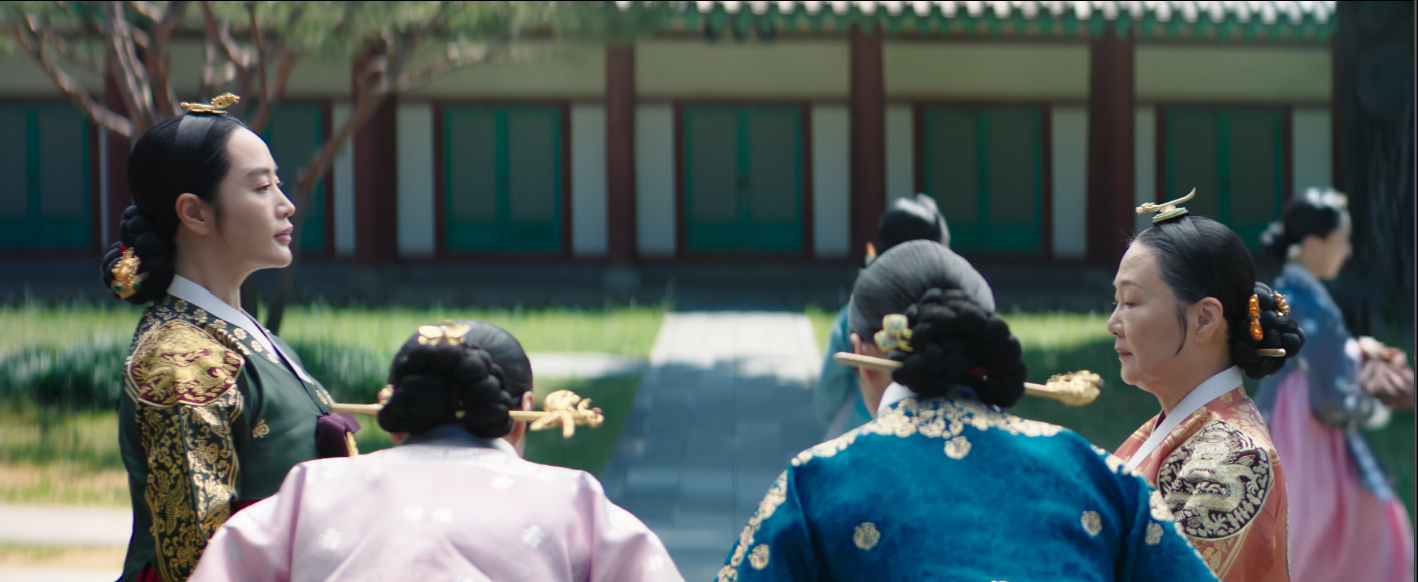
[Under the Queen’s Umbrella | Image Credit: tvN/Netflix]
If you’ve ever found yourself glued to Netflix hits like ‘Under the Queen’s Umbrella’(슈룹) or ‘The East Palace’(동궁), Do you remember the scene in the drama ‘The East Palace’ where the Queen Dowager(대비: Daebi, Formal King’s Consort)—back when she was the Queen Consort(중전: Jungjeon)—placed a curse on a royal favor court lady(승은상궁: Seungeun Sanggung)? The Queen Dowager was furious that a lowly court maid had received the King’s favor, and become pregnant with the King’s child, while she herself was a Queen Consort of noble birth. Have you ever wondered what Seungeun Sanggung was?
Most of Korean historic dramas have the Joseon Dynasty, Korea’s most well known historic era, as the background of their plots. And viewers are swept into a dizzying maze of titles: absolute matriarchs like the Great Queen Dowager (대왕대비: Daewangdaebi) and the reigning Queen Consort (중전: Jungjeon); blood-divided royal daughters split between legitimate Gongju(공주) and secondary Ongju(옹주); and fiercely ambitious concubines ranked from Bin(빈) down to Sugwon(숙원). Even beneath them, the palace buzzed with king-favored Seungeun Sanggung(승은상궁), sharp-eyed court ladies (궁녀: Gungnyeo), young apprentices (생각시: Saeng-gaksi), and lowly floor-scrubbing servants (무수리: Musuri).
Of course, there are also titles denoting male status—such as Jusang-jeonha(주상전하) or Sanggam-mama(상감 마마) for the King, and Seja-jeoha(세자저하) or Donggung-mama(동궁마마) for the Crown Prince. Because intense palace intrigue and psychological warfare drive the core plotlines of historical dramas, these vibrant titles demarcating palace rank heighten dramatic tension and immerse the audience.
For non-Korean readers, however, these designations can feel quite unfamiliar. Let's delve into the hierarchical structures and colorful titles of royal court women that add hidden depth to Joseon dynasty period dramas.
The Legitimate Royal Queen Lineage: Great Queen Dowager, Queen Dowager, Queen Consort, and Crown Princess Consort
Reigning at the pinnacle of the palace women’s world were without question the Great Queen Dowager(대왕대비: Deawangdeabi), the Queen Dowager(대비: Deabi), the Queen Consort(중전: Jungjeon) and the Crown Pricess Consort(세자빈: Sejabin). The Great Queen Dowager (the reigning King's grandmother and eldest court matriarch) and the Queen Dowager (the formal King’s Consort) wielded immense influence nearly on par with the monarch himself. In drama ‘The East Palace’, the chilling tension between a king born to a concubine and his legitimate stepmother, the Queen Dowager, served as a primary engine driving the plot.
While the Dowagers were the court’s highest-ranking elders, the true master directing the Naemyeongbu (내명부: the internal royal court women’s bureaucracy) was the Queen Consort (중전: Jungjeon). Her residence was called the Junggungjeon (중궁전: Central Palace)—named for its position at the physical heart of the palace layout—which became another metonym used to revere the queen.
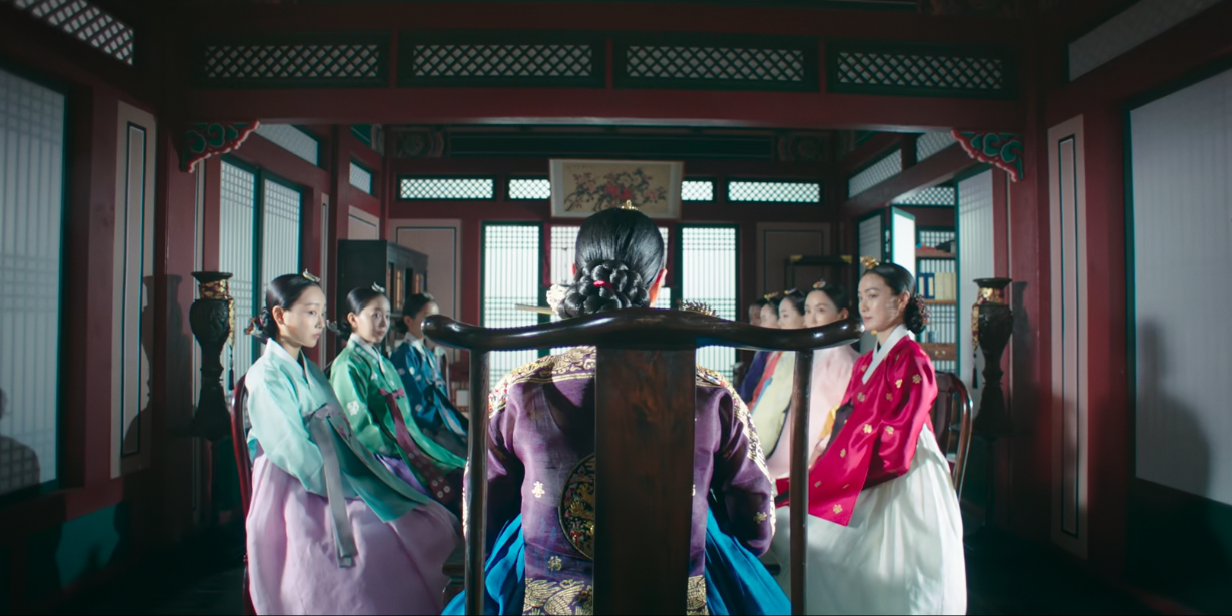
[Under the Queen’s Umbrella | Image credit: tvN/Netflix]
In Under the Queen’s Umbrella, the fierce battle of wits between the the Queen Dowager and the Queen Consort formed the crux of the drama. Adding to this line was the Crown Princess Consort (세자빈: Sejabin), completing the "legitimate" royal consort lineage. The moment a Queen Consort or Crown Princess bore a legitimate son (the firstborn legitimate prince, Wonja), she gained the most formidable legitimacy and political power in the royal line of succession.
Their supreme authority was clearly reflected in strict dress regulations. Because the Joseon dynasty adhered to a rigid caste divide between direct lineage and collateral line (jeok-seo discrimination), no matter how deeply a concubine was favored by the king, she was visibly distinguished from primary queen by attire and jewelry. The formal upper jacket worn by royal women was called the ‘dangui’(당의). Only legitimate consorts—such as the Great Queen Dowager, Queen Dowager, Queen Consort, and Crown Princess—could wear circular embroidered insignia patches called ‘bo’ across four spots: both shoulders, the chest, and the back. Woven in brilliant gold and colorful patterns, the bo featured dragons or phoenixes for the Queen and Dowager, and phoenixes or mythical girin for the Crown Princess. In contrast, while concubines could embellish their garments with gold leaf foil or vibrant colors, they were strictly forbidden from wearing a dangui with bo patches.
Hairstyles mirrored this strict hierarchy as well. In dramas set in early-to-mid Joseon, court women wore large, elevated wig structures called ‘gache’(가채), decorated with an exquisite hair accessory known as a ‘tteoljam’(떨잠)—ornaments mounted on coiled springs of jade or precious gems that quivered delicately with every movement. The Great Queen Dowager, Queen Dowager, Queen Consort, and Crown Princess wore three tteoljam in total (one at the center and one on each side). Concubines were allowed only one or two placed strictly on the sides, never in the center, and were subject to greater restrictions regarding motifs and materials.
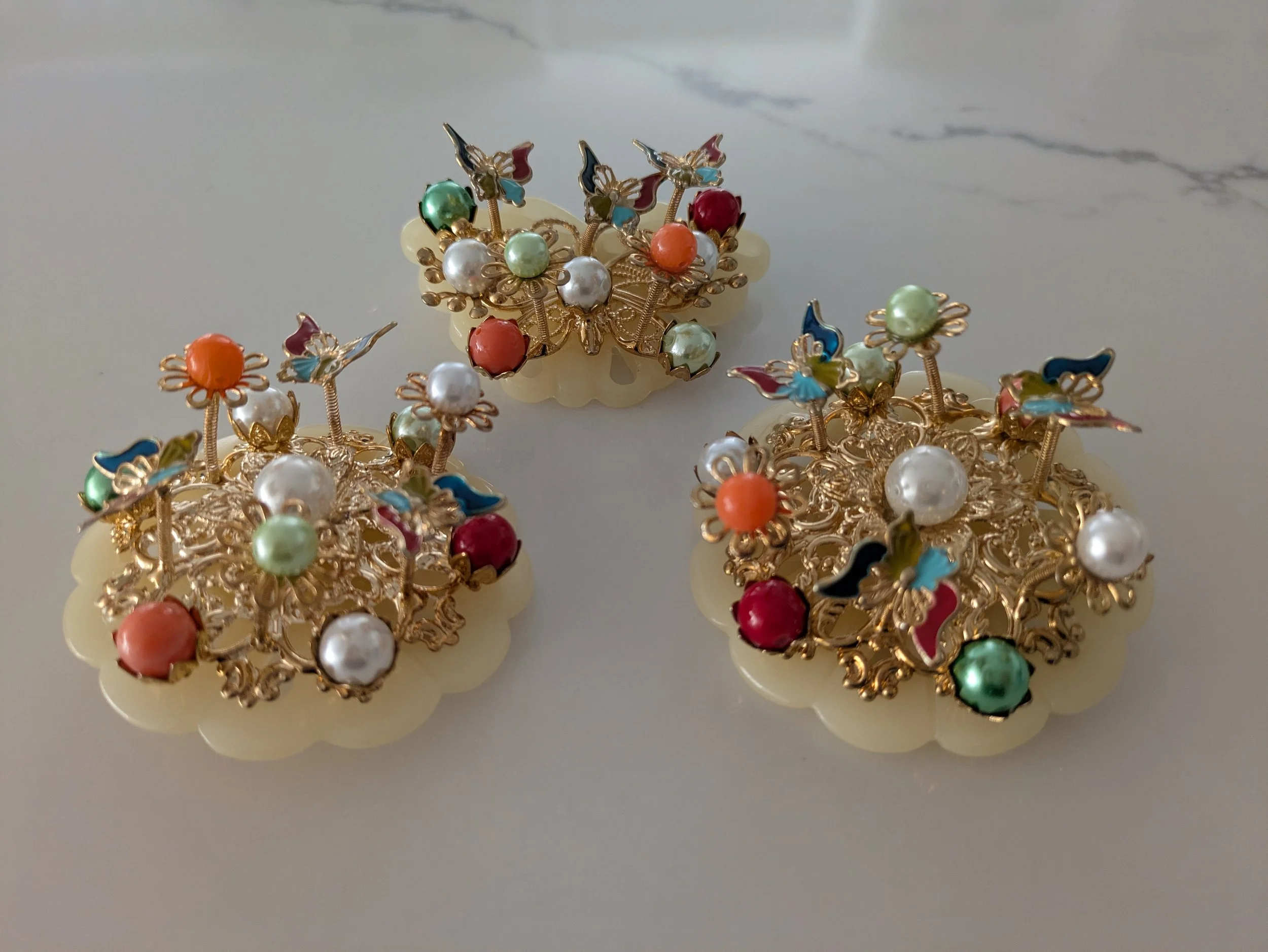
[The tteoljam, an exquisite royal hair ornament that swayed gracefully on coiled wire springs mounted with jade and gems. Only Principal Royal Wives like Queens, Crown Princesses, and Dowagers were permitted to wear a full set of three. Image credit TripleJ7 LLC]
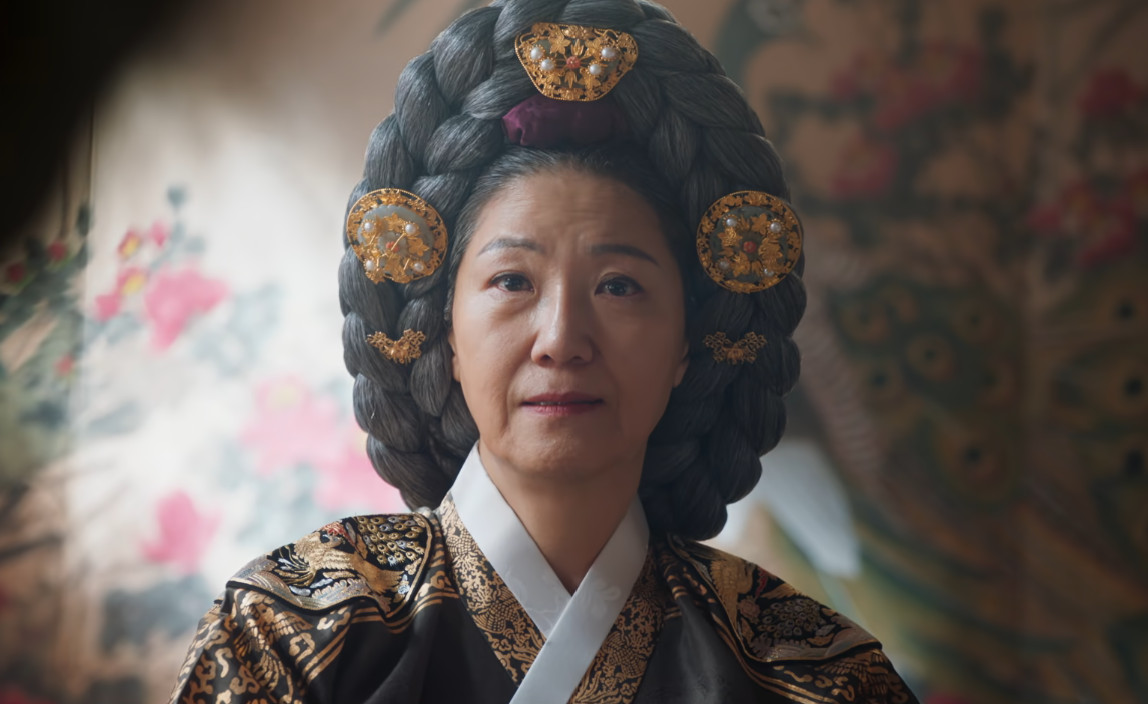
[Bon Appetit, Your Majesty | Image credit: tvN/Netflix]
While dramas frequently portray legitimate wives being quietly slighted by favored concubines, in reality, a Queen or Crown Princess held an overwhelming psychological edge from the moment she entered the room, heralded by her attire and ornamentation.
Royal Concubines: Protagonists of Palace Intrigue
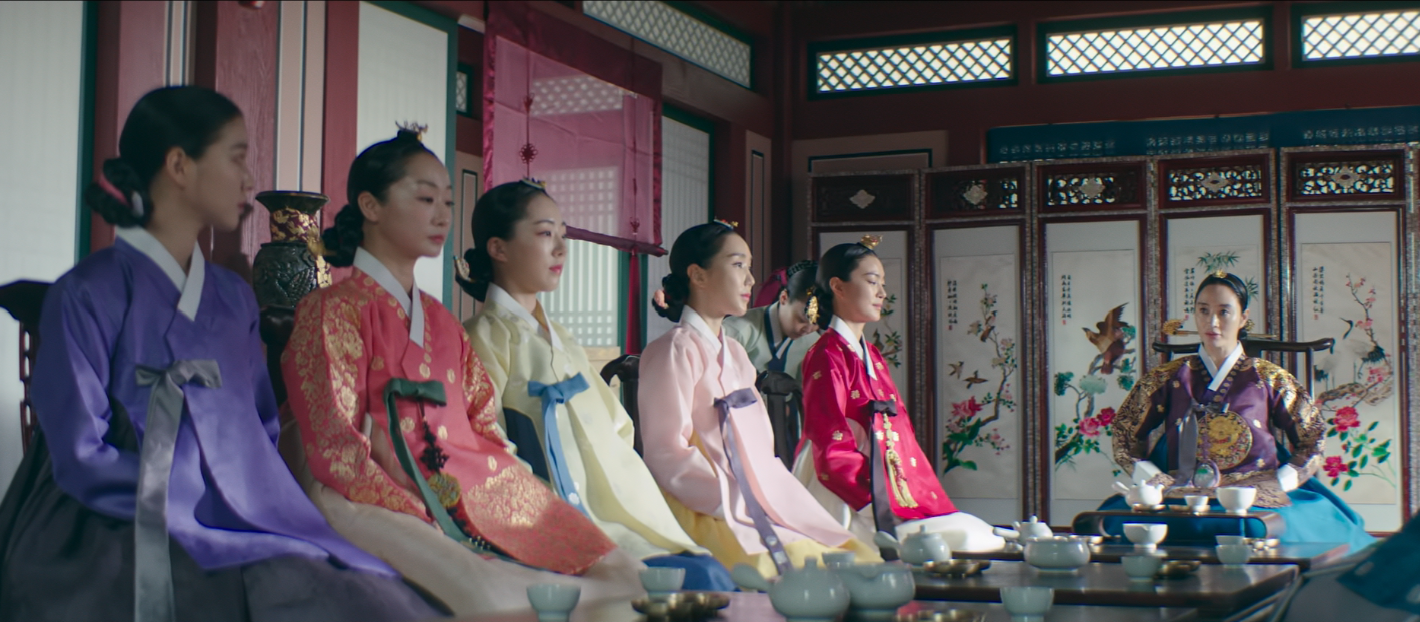
Now let us examine the figures who most frequently take center stage in palace power struggles: the royal concubines (후궁: Hugung). The Joseon concubine system functioned like a meticulously codified civil bureaucracy with precise ranks(품: Pum). While the Queen reigned supreme above all official grades (무품Mupum, grade-less) as the singular Mother of the Nation, concubines were arranged in a strict hierarchy beneath her, ranging from Senior 1st Rank(정: Joeng) down to Junior 4th Rank(종: Jong). Senior ranks outranking Junior ranks.
[Under the Queen’s Umbrella | Image credit: tvN/Netflix]
Their titles reflected the rigid aristocratic caste system of the era. However, concubines offered high dramatic potential because rapid upward mobility was genuinely possible. If favored by the King, a Sugwon(숙원 : the lowest, 4th of Junior Rank) could skip several tiers to become a Sugui (숙의: Junior 2nd Rank). If she bore a prince, she could be elevated immediately to the pinnacle of Bin (빈: Senior 1st Rank). The dramatic rise of Jang (장희빈: Jang Hui-bin)—the first and only woman in Joseon history to climb all the way from royal concubine to Queen Consort—remains an enduring staple of K-dramas.
Princesses: Gongju vs. Ongju
Another recurring drama motif involves the King's daughters, Gongju(공주) and Ongju(옹주). Viewers often notice that a monarch's daughter is addressed as Gongju in one instance and Ongju in another. Why the distinction for women with the same royal father? The difference lies entirely in maternal status: whether born of the primary Queen (jeok) or a concubine (seo).
In the Joseon court, a king’s daughter was titled entirely based on who gave birth to her: Gongju (Princess of the Direct Line) was Born between the King and his primary wife, the Queen. Ongju (Princess of the Secondary Line) was Born between the King and a concubine.
Because Joseon placed supreme importance on bloodline, both held the grade-less (Mupum) noble status above common civil ranks simply by carrying royal blood. Yet within a society where discrimination between legitimate and illegitimate offspring was codified into state law, the disparity in their real-world treatment was stark.
This gap was evident upon adulthood when the princesses married and established households outside the palace gates. A Gongju was granted 250 gyeol of farmland and 30 servants, whereas an Ongju received 180 gyeol and 15 servants—nearly half the allotment. By law, the architectural scale and grandeur of a Gongju’s private estate were kept distinctly larger than that of an Ongju.
Mama vs. Jaga: The Honorific Suffixes
Class distinctions extended to the formal honorific suffixes used in everyday court speech:
Mama (마마): The highest royal honorific, reserved strictly for the Great Queen Dowager, Queen Dowager, King, Queen, and Crown Prince—roughly equivalent to "Your Majesty" or "Your Royal Highness" reserved solely for direct legitimate heirs and sovereigns.
Jaga (자가): A respectful title positioned one tier lower, used for concubines, Ongju, and secondary royal kin—roughly akin to "Your Highness."
Regardless of how deeply a king loved a daughter or concubine, her lifelong address and social standing were dictated by whether she was born of the primary consort.
Earlier historical dramas frequently made historical inaccuracies by applying mama indiscriminately across queens, concubines, gongju, and ongju. Strictly speaking, proper court etiquette dictated that individuals outside the direct legitimate line should be addressed as jaga. Historical records do show, however, that exceptionally favored princesses were occasionally addressed as Ongju-mama out of deep reverence by palace attendants, and by the late Joseon period, palace women increasingly extended mama more liberally to lower royals as a sign of supreme deference.
Every syllable in words like Gongju, Ongju, Mama, and Jaga quietly encapsulates the unyielding Confucian order and caste divisions that governed the Joseon court.
The Shadow Power Brokers: Palace Women or Cour Ladies (Gungnyeo)
While royal family members and concubines were the formal masters of the palace, the individuals who operated this massive institutional machine behind the scenes were the court ladies, Gungnyeo(궁녀). Palace women constituted a dedicated female civil service, receiving formal state stipends while managing the operational household of the court. Their world was similarly structured around strict seniority and distinct internal hierarchies. The early breakthrough drama ‘Jewel in the Palace’ (Dae Jang Geum) achieved historic success precisely by spotlighting these previously overlooked women. The following outlines the hierarchical ranks of the court ladies.
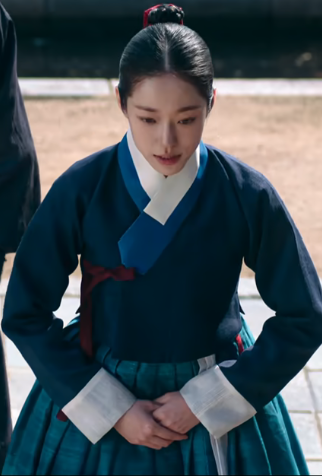
The Apprentice Maidens (생각시: Saeng-gaksi): In The East Palace, the character Saeng-gang—despite secretly being an Ongju—infiltrates the court disguised as a saeng-gaksi.
[The East Palace | Image credit Netflix]
These were apprentice court girls. Girls entered the palace between ages 4 and 10 to undergo rigorous training in palace etiquette and technical crafts. Apprentices assigned to elite chambers—such as the royal bedchambers, the embroidery bureau, or sewing bureau—wore their hair braided into two rolls on either side of the head, a style called saengmeori. This hairstyle gave rise to their name, saeng-gaksi.
The Core Workforce (나인: Nain): After roughly 10 to 15 years in the palace, around age 20, an apprentice underwent a formal coming-of-age ceremony akin to a marriage rite and became a certified palace official called a nain. These women handled the hands-on administration of palace life: sewing royal garments, preparing cuisine, and managing records. From this point forward, they received official ranks between Senior 6th and Junior 9th, along with a standard salary.
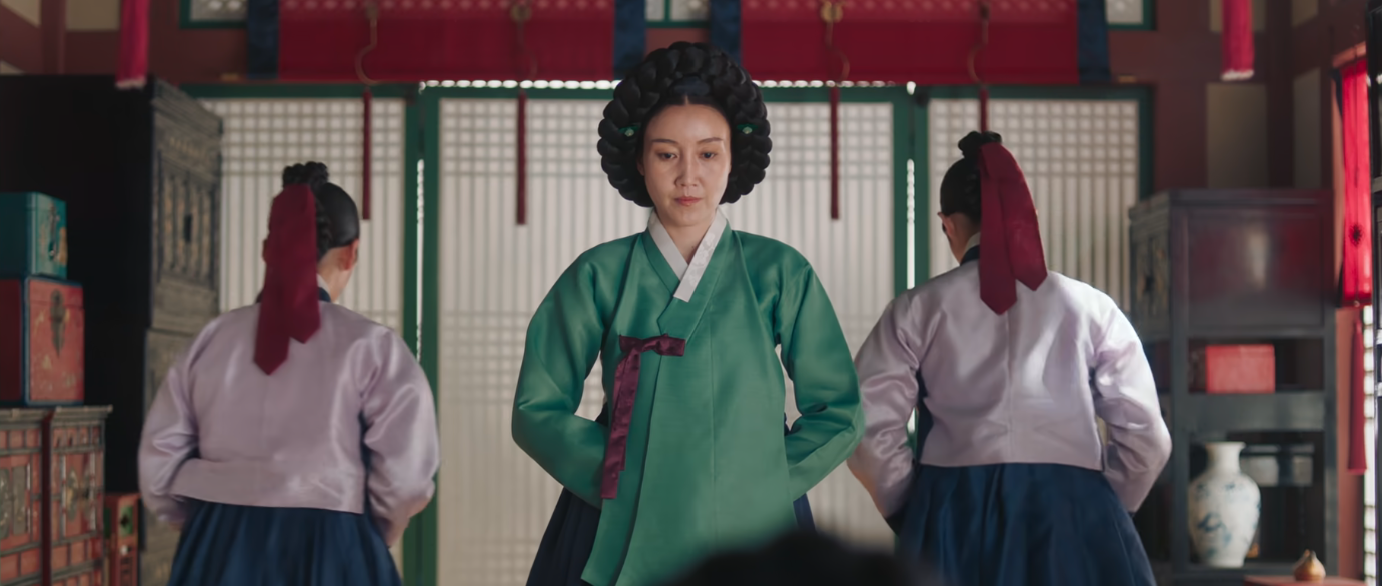
The Zenith of Female Bureaucracy (상궁: Sanggung): Reaching the rank of Sanggung required another 15-plus years of steadfast service as a nain. Holding Senior 5th Rank status, they were high-ranking court officers.
In particular, the Head Court Lady (제조상궁: Jejo Sanggung), who managed all court lady personnel and served closest to the monarch, wielded enough appointment and financial leverage that even high state ministers treated her with great care. She was addressed with deep reverence as Sanggung Mamanim(상궁 마마님).
[Bon Appetit, Your Majesty | Image Credit : tvN/Netflix]
The Joseon Cinderella (승은상궁: Seungeun Sanggung): Featured prominently in The East Palace, a Seungeun Sanggung (Court Lady Granted Royal Favor) occupied an exceptional status within the hierarchy. If a court lady caught the king’s eye and shared the royal bedchamber, she experienced an overnight lottery-like leap in status. She was immediately relieved of general manual duties and granted private quarters with serving maidens. Her rank was immediately elevated out of the laboring ranks of regular court maids to the Senior 5th Rank (Jeong 5-pum), the highest attainable rank for working palace women. Unlike traditional head court ladies who spent decades climbing the bureaucratic ladder, she achieved this overnight. If she bore the king a child, she received an official concubine appointment starting at Junior 4th Rank Sugwon(숙원). This represented a once-in-a-lifetime elevation from commoner or lowborn status into the royal family. However, as shown in the drama ‘The East Palace’, even when these royal favored court ladies won the King’s affection, they often faced envy, jealousy, or utter contempt within the court's rigid hierarchy.
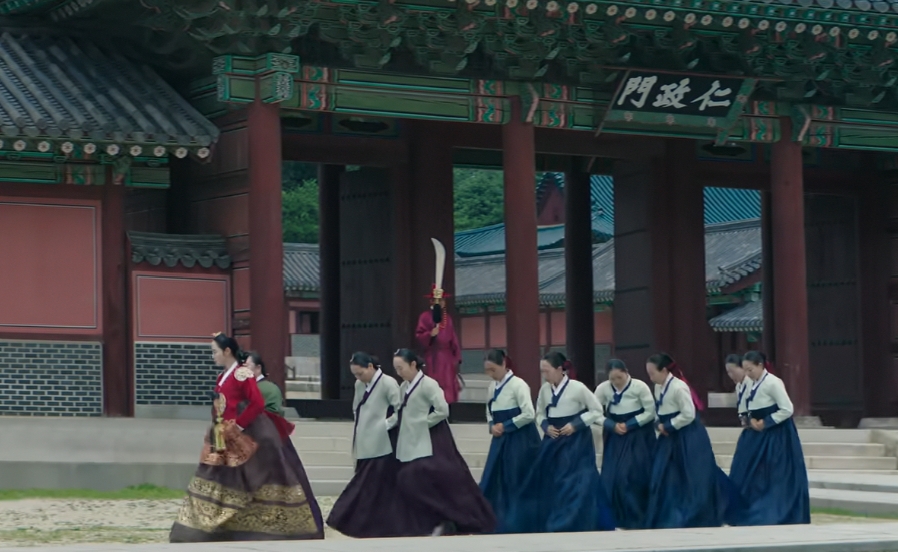
The Lowest Tier (무수리: Musuri): At the absolute base of the court stood the musuri, the domestic handmaidens who served the court ladies. They hauled water, scrubbed floors, stoked furnace fires, and carried out heavy manual labor. Classed as menial palace laborers, they received no ceremonial address and were summoned directly by their birth names. Yet, considering the fact that Lady Choe, the mother of King Yeongjo (the 21st monarch of the Joseon Dynasty), rose from the lowest status of a musuri to the rank of bin(Senior 1sr Rank), the Joseon court was a stage where extraordinary, unexpected drama could always happen.
[Under the Queen’s Umbrella | Image credit: tvN/Netflix]
Dramatic, isn't it? Knowing these nuances doubles the fun of watching Joseon period dramas. What are your thoughts? Feel free to leave a comment with any questions!