
Hanam-do Unlocked: The Secret Coastal Soul, Fierce Dialect, and Real-Life Paradise Behind A Shop for Killers Season 2
[A Shop for Killers Season 2 | Image credit: Disney+ / Hulu / Merrychristmas]
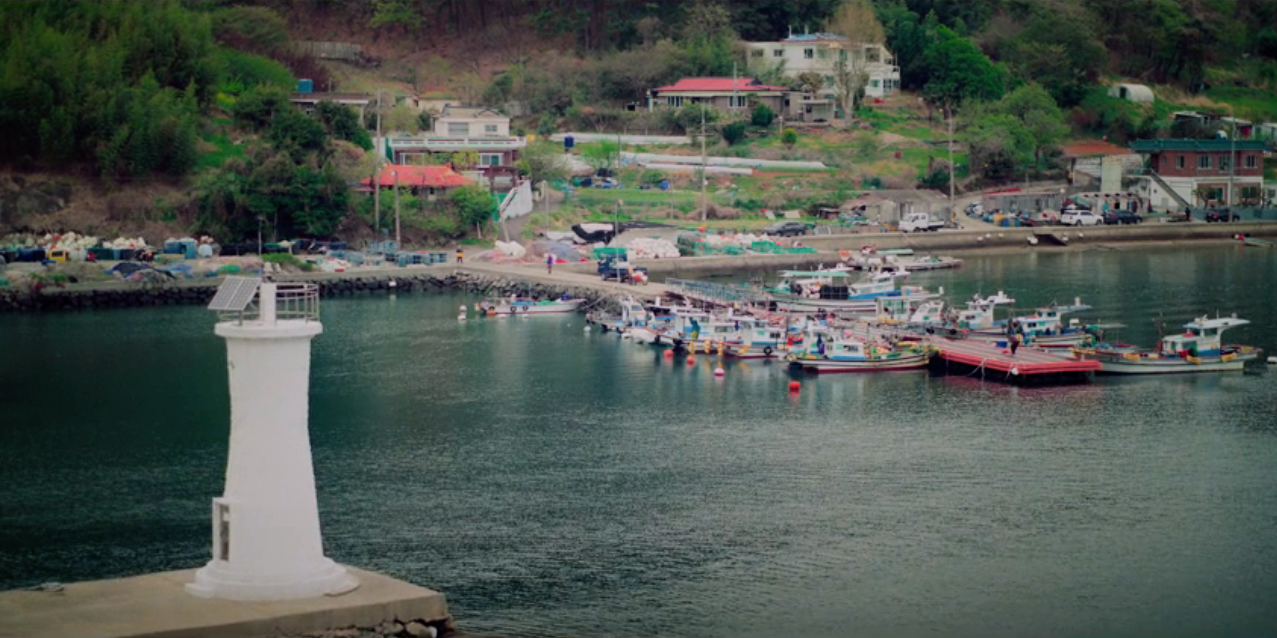
In the second season of A Shop for Killers, the high-octane tension shifts from a besieged, secluded countryside fortress to the windswept isolation of "Hanam-do" (하남도). While the script establishes Hanam-do as a fictional island refuge where Jeong Jian attempts to vanish off the grid, the screenwriters left unmistakable geographic fingerprints across every frame. From the rolling coastal cadence of the local banter to the sharp-tongued warmth of the seaside elders, Hanam-do was firmly anchored in the cultural landscape of Gyeongsangnam-do (경상남도).
Behind the camera, the production brought this sanctuary to life along the rugged, scenic coastlines of the South Coast. To truly appreciate Jian’s journey, one must unpack the rich regional culture, the linguistic hurdles, and the real-world paradise that inspired her exile.
Part 1: Gyeongsangnam-do & The People Behind the Screen
Where is Gyeongsangnam-do and What Makes It Legendary?
Tucked into the southeastern corner of the Korean Peninsula, Gyeongsangnam-do (often called Gyeongnam) borders the Korea Strait and embraces the tranquil, island-studded waters of the Hallyeohaesang National Marine Park. It is a province defined by dynamic contrasts: historic naval harbors, sweeping rias coastlines, and industrial hubs that power South Korea’s aerospace and shipbuilding sectors.
Culinary traditions run deep here, renowned for fresh-caught raw seafood, savory regional delicacies, and a historic maritime heritage celebrated throughout coastal communities.
The Gyeongsangnam-do Dialect: The Basket-Weaving Scene & Linguistic Shock
[A Shop for Killers Season 2 | Image credit: Disney+ / Hulu / Merrychristmas]
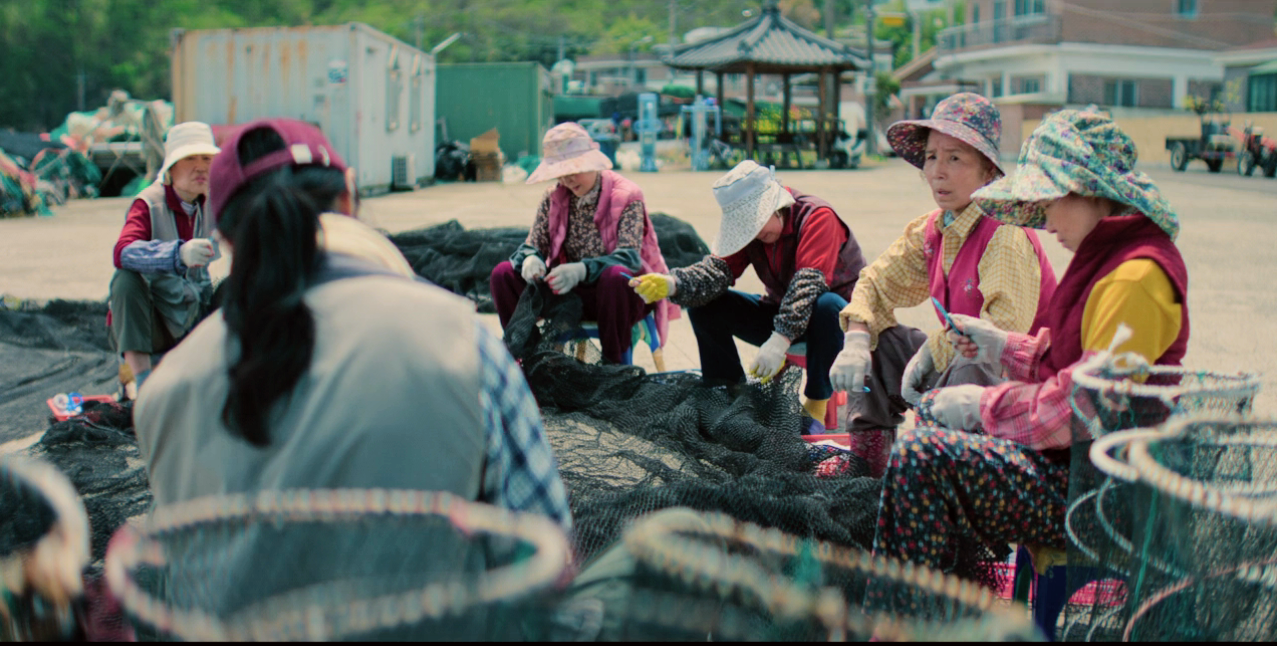
The moment Hanam-do’s true regional identity comes alive on screen is during the seaside basket-weaving scene. Under the warm afternoon sun, a circle of local village aunties (halmae / 할매) sit together on the wooden coastal deck, skillfully crafting and weaving traditional fishing baskets from scratch with practiced hands while exchanging rapid-fire neighborhood gossip.
For international audiences, the scene plays out seamlessly with standard English subtitles, looking like casual, breezy seaside chatter. But for native Korean speakers tuning in, the moment was an absolute linguistic ambush.
Even as a fluent, native speaker of Korean, I found the rapid-fire delivery of the Western Gyeongsang dialect so dense, rhythmically intricate, and packed with dropped consonants and localized slang that I actually had to rely on the English subtitles just to keep up with every punchline.
Unlike the standard Seoul Korean taught in language textbooks or the heavily media-exposed accents of Busan and Daegu, coastal Western Gyeongsang speech possesses a distinct flavor:
The Unique Question Grammar (-노 (no) vs. -나 (na)): The aunties intuitively follow strict grammatical rules where open-ended questions with interrogatives (who, where, why) demand a -노 (no) ending ("어데 가노?" / "Where are you going?"), while simple yes/no questions take -나 (na) ("밥 뭇나?" / "Did you eat?").
Compressed Vocabulary & Dropped Syllables: Words are clipped and fused together at lightning speed, turning full sentences into rapid bursts of sound that can completely disorient anyone outside the coastal provinces.
The "Tsundere" Cadence: The sheer volume and sharp inflection can easily sound aggressive or argumentative to an untrained ear, when in fact, it is simply the natural, expressive rhythm of everyday coastal storytelling.
It is a masterclass in authentic regional writing—a scene where the dialogue serves as an auditory landscape as vivid as the rocky coastline itself.
Character Subtext: Tactical Isolation or Sheer Dialect Confusion?
Throughout this exchange, Jian remains notably quiet, aloof, and unresponsive. On the surface, her silence aligns with her survival instincts: she is a hunted woman keeping her emotional guard up to avoid forming dangerous attachments.
Yet, watching the scene unfold sparked an intriguing personal theory of mine: what if Jian was simply struggling to understand what the aunties were saying? While not explicitly confirmed as an in-universe fact, I could easily imagine a young woman raised with standard Seoul Korean hitting an immediate linguistic wall when dropped into a coastal southern fishing village. From my perspective, her wide-eyed hesitation feels less like cold tactical caution and more like the hilarious, highly relatable look of someone desperately trying to decode a dialect that sounds like a whole different language.
Gyeongsangnam-do People: Muttukttuk-ham vs. True Jeong
Here is what international viewers might easily misunderstand during those seaside encounters: the village aunties are not being cold, hostile, or mean-spirited.
In Korean sociology, natives of Gyeongsangnam-do are culturally renowned for their muttukttuk-ham (무뚝뚝함)—a stoic, unvarnished, and notoriously blunt demeanor. In this region, flowery pleasantries, excessive smiles, and sugary compliments can feel distinctly unnatural to older generations. Instead, their communication is raw, unfiltered, and delivered with the force of a coastal gale.
The brilliance of the writing shines through when an aunty grumbles sharply at Jian with a scowl, only to immediately turn around and shove a container filled with homemade banchan (side dishes) straight into her hands.
That exact contradiction is the gold standard of "Tsundere" Jeong (정). In Gyeongsangnam-do culture, affection, empathy, and neighborly worry are rarely whispered in tender words; they are shoveled onto your plate. Handing over homemade side dishes to an aloof outsider is the ultimate regional gesture of fierce, unspoken, and protective care.
Part 2: The Real Sacheon, Expat Reality & Societal Truths
The Filming Ground & The Viral Pastry Clue
While Hanam-do remains a fictional name, the series provides clear clues that place it adjacent to Sacheon (사천), one of the actual filming locations.
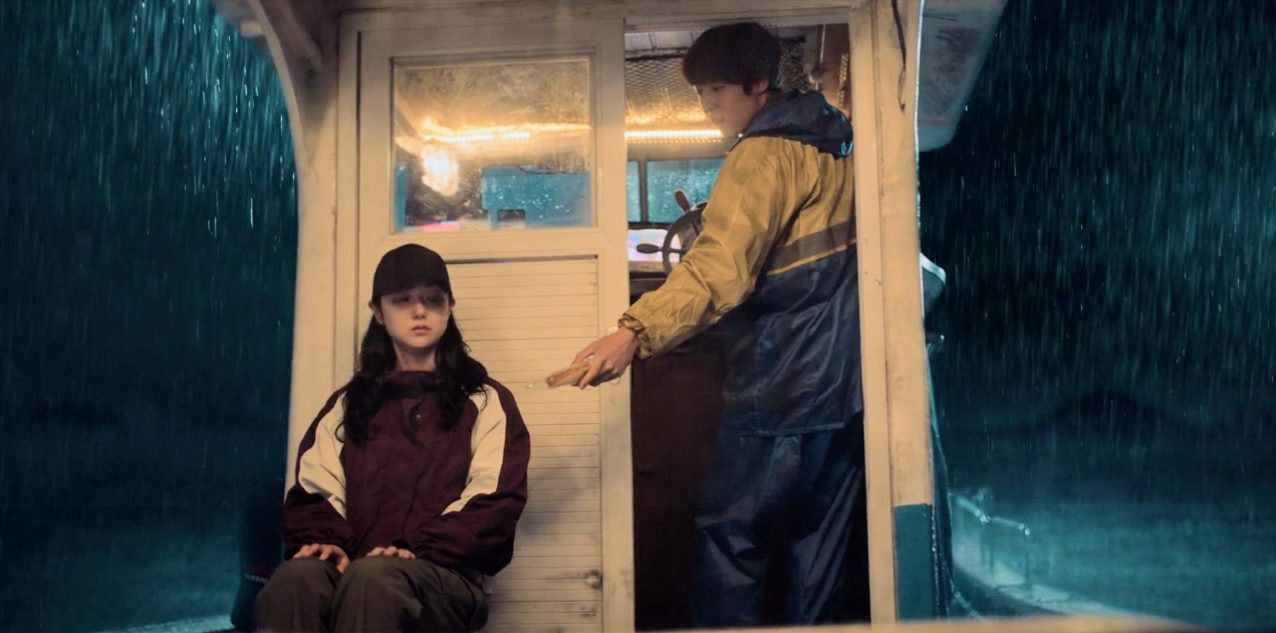
During the stormy crossing where Woojin gives Jian a ride on his vessel because regular ferry lines are suspended, he hands her a local pastry, mentioning that it is a famous delicacy from Sacheon that has been featured on YouTube. This dialogue serves as a key clue hinting that the fictional island of Hanam-do is located close to Sacheon. While the exact treat is not explicitly named on screen, I believe it strongly calls to mind the viral Sacheon Castella (사천 카스테라)—a local specialty that has gained widespread popularity across numerous travel and foodie YouTube channels.
[A Shop for Killers Season 2 | Image credit: Disney+ / Hulu / Merrychristmas]
The Personal Heartbeat: My Three Years in Sacheon
Seeing Sacheon's shoreline featured in a global thriller strikes a deeply personal chord for me. My family lived in Sacheon for three years, and without a doubt, that has been the best time of my life.
To many Seoul residents, relocating to the southern provinces is mistakenly perceived as being sent into rural exile. Yet, having lived in both the United States and South Korea, I know that the notion of Sacheon being "rural" in the American sense is a complete misconception.
Busting the "Korean Boondocks" Myth
South Korea’s compact geography and hyper-connected infrastructure mean that true American-style rural isolation simply does not exist. In Sacheon, you are never stranded in the middle of nowhere. Modern conveniences—general hospitals, multiplex movie theaters, major shopping hubs, and high-speed transit links—are all accessible within an easy 30-minute drive.
In K-dramas, writers love using southern coastal villages as impenetrable hiding spots where fugitives can vanish. In reality, South Korea is so densely wired and accessible that I don't think there is any place on the peninsula where you could truly disappear. If you were in a situation where you genuinely needed to go off the grid, you would have to flee overseas, just as seen in other classic Korean thrillers.
The Expat Sanctuary: Why We Chose Sacheon Over Seoul
Given the choice, my family would pick Sacheon over Seoul anytime—and every expat who was with me during my time in Korea said the exact same thing.
While the capital offers endless neon and towering skyscrapers, it also comes with suffocating traffic, cramped apartments, and relentless concrete congestion. Sacheon, by contrast, offered us clean coastal air, mild southern winters, panoramic ocean sunrises, and a serene pace of life that provided genuine balance.
Local Life & Hidden Gems
Living in Sacheon felt like enjoying a permanent coastal getaway:
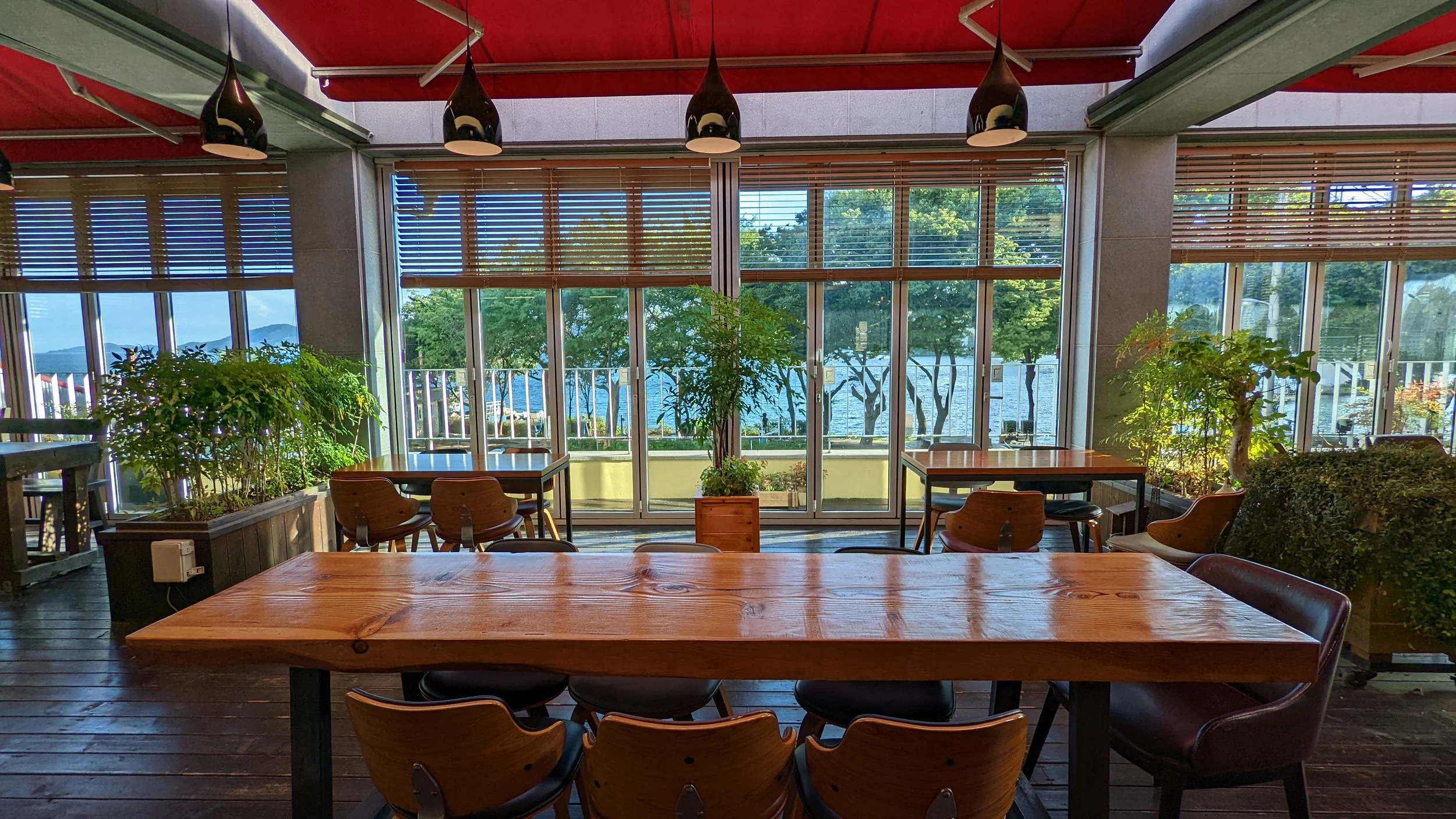
Ocean-View Mega-Cafes: I used to spend my weekends tucked away in Sacheon's sprawling architectural mega-cafes, enjoying reading, sipping coffee, and clearing my head against the panoramic ocean views.
[Image credit: TripleJ7 LLC]
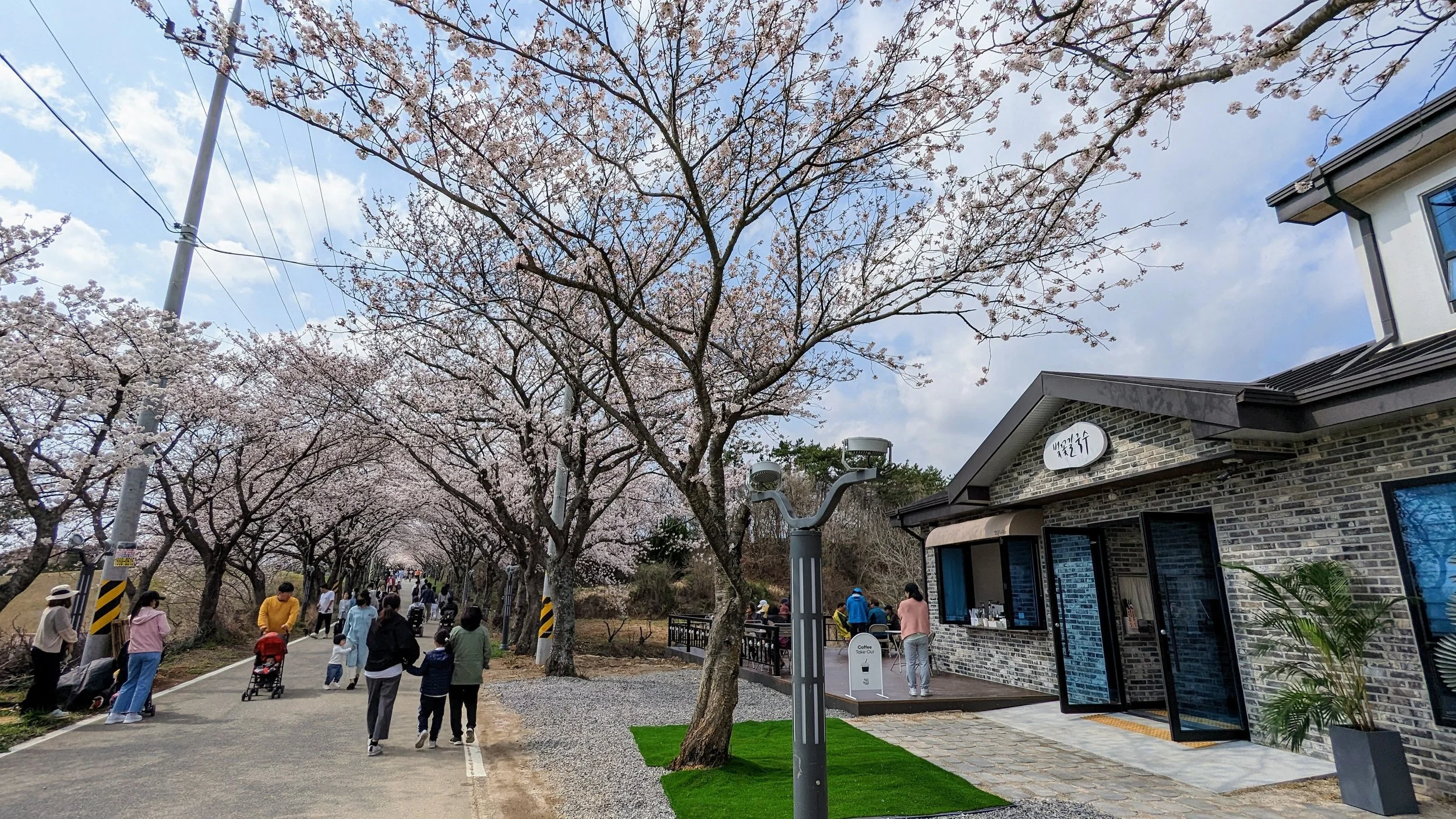
Seasonal Splendor: During spring, you can see beautiful cherry blossoms everywhere across the city, while in the fall, you can visit serene, historic mountain temples with weathered trees and fiery foliage in the background.
[Image credit: TripleJ7 LLC]
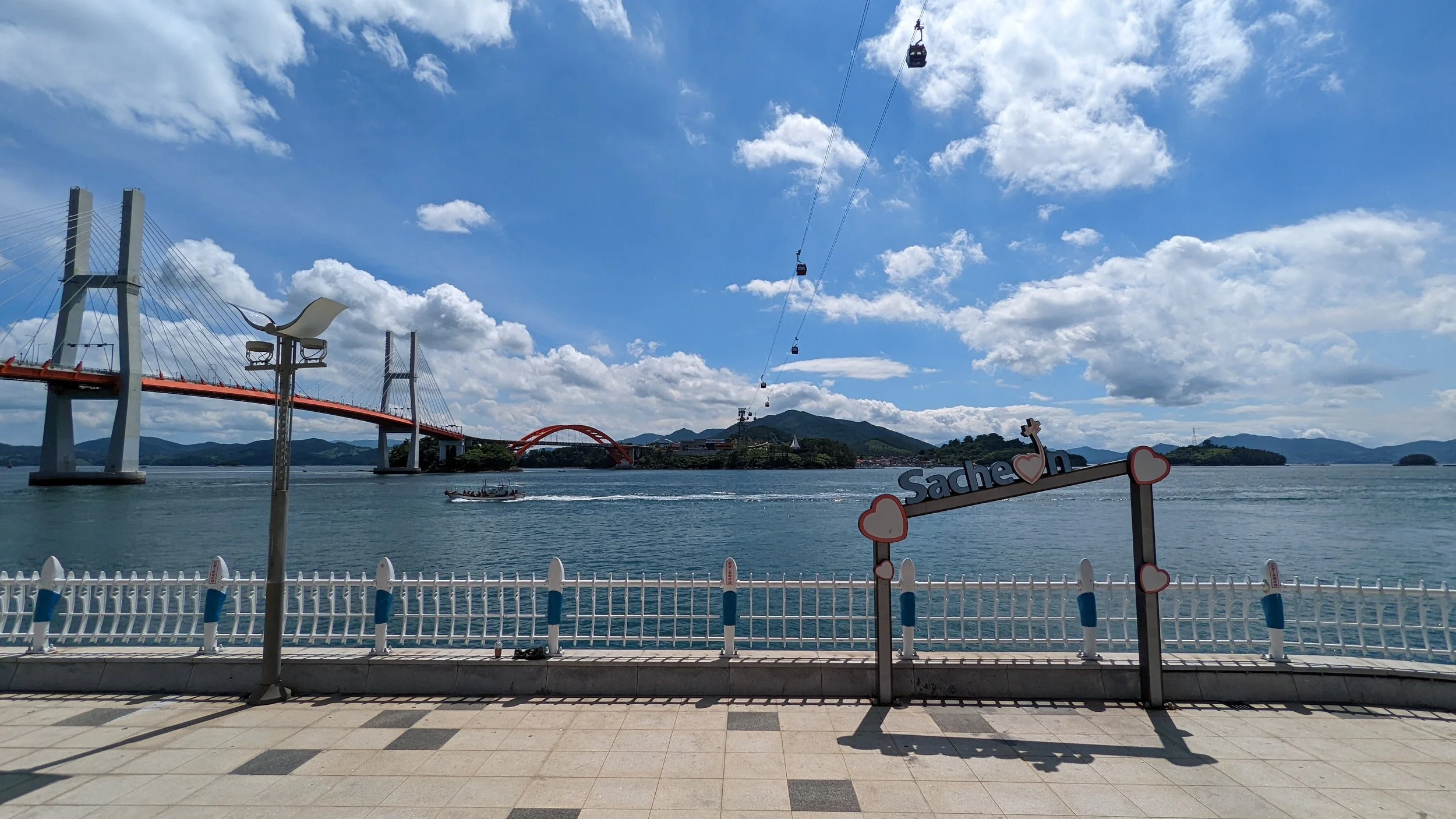
Coastal Attractions: For tourists, Sacheon is famous for the Sacheon Ocean Cable Car featuring glass-bottom crystal cabins, as well as picturesque seaside glamping sites right along the water.
[Image credit: TripleJ7 LLC]
The Socio-Demographic Mirror: What Lies Beneath the Screen
Behind the cinematic charm, A Shop for Killers reflects urgent demographic realities facing South Korea today:
The Youth Exodus & The Whole Town's Romance: Across regional Korea, younger generations have steadily left for bigger cities like Seoul, creating a serious social issue. On Hanam-do, Jian and Woojin are practically the only young adults in sight. In an aging town where young people are so rare, any potential romance or interaction between them naturally captures the curiosity and attention of the entire village.
The Migrant Labor Reality: The reduction of young adults has caused a severe labor shortage in regional industries, resulting in a growing workforce brought in from overseas, especially Southeast Asia. The drama captures this reality perfectly when Jian walks into a local Thai restaurant and sees gatherings of Southeast Asian men wearing work uniforms. These establishments serve as vital community hubs for the international workers whose labor sustains the local economy.
Final Thoughts
Have you ever met someone with that classic, tough-on-the-outside, warm-on-the-inside Gyeongsangnam-do personality? And when you plan your next trip to South Korea, would you take a detour down south to explore the coastal magic of Sacheon? Drop your thoughts in the comments below!
